
Dexterous Hand Price Guide: Compare the Complete Research Package
Source: https://sourcebotics.com/guides/dexterous-hand-price-guide-2026/
TL;DRA dexterous-hand price is only comparable when the model revision, left/right quantity, tactile option, controller and integration scope match. This review found a public $7,800 listing for a tactile Unitree Dex3-1, but it was marked sold out. The reviewed RH56DFTP, Dex5-1 and XHAND1 documents do not establish a current standalone price. Use those facts as a starting point, then obtain an itemized quote for the hand your project actually needs.
Prices we can and cannot establish
| Product or family | Price evidence reviewed | How to use it |
|---|---|---|
| Unitree Dex3-1 tactile | Airpuria displayed $7,800 USD and “sold out” on the reviewed listing | A third-party reference, not evidence of stock or a Sourcebotics price; confirm one hand versus a package |
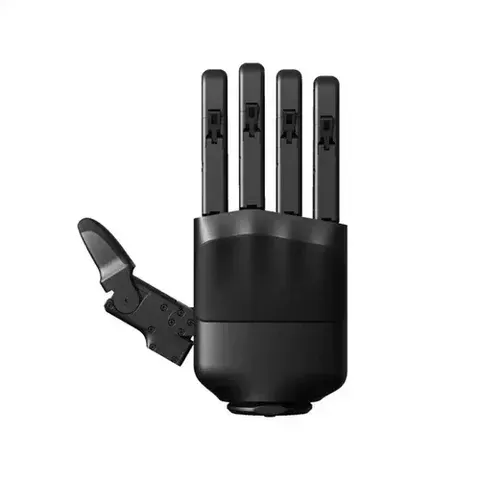
| Inspire RH56DFTP | The reviewed manufacturer manual defines hardware and interfaces, not a sales price | Request a quote for side, sensor coverage, communication option and accessories |
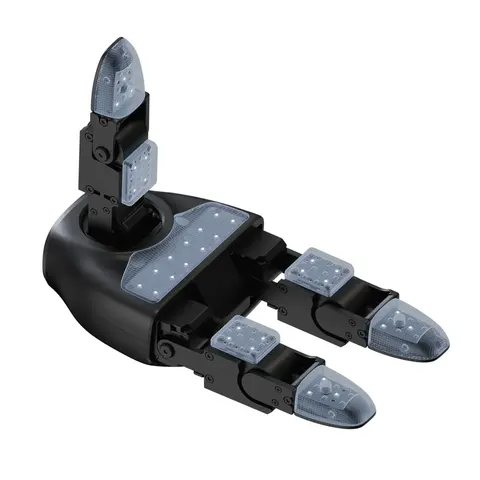
| Unitree Dex5-1 / Dex5-1P | The reviewed manufacturer page distinguishes variants but does not establish a standalone price | Name the exact variant; do not assume the pressure-sensor package is standard |
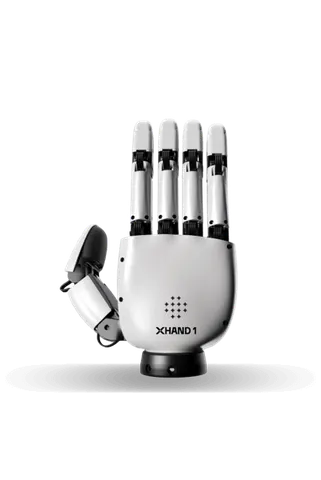
| Robotera XHAND1 | The reviewed brochure is a technical reference, not a current price list | Specify the original XHAND1 or the relevant newer variant before comparing offers |
The Dex3-1 figure comes from Airpuria's product listing, reviewed on 2026-09-15. Shipping was shown as calculated at checkout. We did not verify fulfillment, package contents or an applicable tax total. Product technical claims should be checked against Unitree's Dex3-1 page, not inferred from a reseller price.
This is not a market-wide minimum or maximum. Older launch prices, domestic-market promotions and robot-package upgrades can describe different purchases. A currency conversion cannot make their contents equivalent.
What changes the quoted cost
Hand and side. Write the complete model code and quantity. “One set” may mean a single hand, a pair, a hand with an adapter, or a robot-mounted package. Specify left and right separately.
Sensing. Ask which pads, fingertips and palm areas are instrumented, which data are accessible, and whether calibration tools are included. In the Dex5 specification table, the pressure-array option belongs to Dex5-1P. A cheaper non-P quote is not the same sensing package.
Control hardware. Include the interface adapter, controller, power supply and cables needed by your host computer. A hand that exposes CAN may still need a suitable host adapter and a supported software stack.
Mechanical integration. Price the wrist adapter, fasteners, cable routing and any design work. Check the total mass and moment at the arm flange before paying for an adapter.
Software and support. Separate downloadable software from commissioned integration work. Record the supported operating system, firmware, example application, support language and scope of assistance. Do not assume that the word “SDK” includes a working integration with your robot.
Normalize two quotes with this worksheet
Copy these rows into the public procurement spreadsheet. For each supplier, mark included, optional, excluded or unresolved; enter a price only when it is supported by the quotation.
| Cost line | Information to capture | Common comparison error |
|---|---|---|
| Hand hardware | Full model code, revision, side, quantity | Single hand compared with pair |
| Tactile option | Sensor coverage and accessible data | Force feedback compared with a tactile array |
| Controller and adapters | Model numbers and supported host | Bare hand compared with ready-to-connect kit |
| Power and cables | Supply, pinout, harness and lengths | Assuming accessories pictured are included |
| Mechanical parts | Flange, fasteners and design scope | Ignoring mounting and payload constraints |
| Software and integration | Deliverables and acceptance procedure | Treating bespoke engineering as included support |
| Spares and repair | Quoted parts, repair location and freight responsibility | Treating a warranty duration as complete service coverage |
| Delivery and taxes | Named destination, delivery terms, exclusions | Comparing equipment-only with delivered totals |
Your equipment subtotal is the sum of the confirmed hardware and accessory lines. Add the agreed delivery and service charges separately. Keep unresolved items visible; do not silently count them as zero. Apply import costs to the confirmed classification and destination with your broker, rather than a universal percentage.
A robot upgrade price is not a hand price
Sourcebotics publishes G1 EDU configuration prices that include different hand options. Those are complete robot configurations. The difference between two packages may include wrist joints, electronics, installation or other scope changes, so it does not establish what one standalone hand costs.
If you already own a robot, request a retrofit quote that names its revision and firmware. If you are buying the robot as well, compare the complete factory configuration before assembling a separate shopping list.
How to spend a limited research budget
Choose the experiment's necessary control and sensing first, using the dexterous-hand buyer's guide and comparison table. Then ask for a minimum configuration and a separately priced upgrade. This makes the cost of additional sensing or motion explicit without assuming that more joints improve the result.
Request a documented sample acceptance procedure before a larger order. Warranty, repair arrangements and delivery dates should come from the seller's written terms. We do not assume a standard discount, universal warranty or fixed delivery time across manufacturers.
Send model codes, side, quantity, host robot and destination through the hand quotation request. Include the questions still unresolved in your procurement checklist.
Sources and review scope
The linked seller listing and Unitree pages were reviewed on 2026-09-15. Hardware scope for the quote-only rows comes from the RH56DFTP manufacturer manual and original XHAND1 brochure. The worksheet is editorial guidance, not a quotation, independent hardware test or forecast of future prices.
FAQ
How much does a research dexterous hand cost?
The price depends on the complete configuration. The public Dex3-1 reference above is one seller's $7,800 listing, marked sold out; it does not establish a range for all research hands. Other compared models require a current quote.
Are prices normally per hand or per pair?
Do not assume either. Require the quotation to state left/right quantities and the number of controller and accessory sets.
Does more active DOF mean better value?
Only if the additional motions are required. Price per joint ignores sensing, software, mechanical fit and the experiment's actual goal.
Can Sourcebotics match an external listing?
An external price is a reference, not a price-match promise. Share the exact listing and configuration so the scope can be compared.
Planning a robotics purchase? Share the quantity, configuration and destination so we can check fit, availability and quote requirements.
Request a quote— The Sourcebotics sourcing desk
Products to investigate
- Controlled DOF
- 6
- Moving joints
- 12
- Fingertip repeatability
- ±0.2 mm
- Degrees of freedom
- 20 total; 16 active
- Hand mass
- 1100 g
- Fingertip force
- 10 N
- Active degrees of freedom
- 12; independently driven
- Weight
- 1.1 kg
- Dimensions
- 190.36 × 94 × 47 mm