Unitree G1 vs Research Humanoids: SDK Access, Configurations & Cost
Source: https://sourcebotics.com/guides/unitree-g1-vs-research-humanoids/
TL;DRCompare G1 base and EDU development access, U1–U6 configurations, hands, compute and software requirements before choosing a research humanoid.
Start with the research question
A platform for locomotion-policy research needs different access from a robot used to demonstrate existing movements. A manipulation project needs usable hands, sensing and control interfaces; a human-interaction study may prioritize repeatable behavior and a suitable workspace. Write the required experiment before selecting a model.
| Research objective | What the purchase must establish | What a demo cannot establish |
|---|---|---|
| Develop whole-body control | Joint command modes, feedback, rates, controller handover and recovery procedure | Permission to replace the delivered controller |
| Collect manipulation demonstrations | Hand configuration, teleoperation input, synchronized observations and data export | That recording tools, gloves or a trained policy are included |
| Study walking at human scale | Body dimensions, joint layout, test space and operating procedure | Performance under your payload, floor and duty cycle |
| Learn manipulation at a table | Arm workspace, tool payload, software interface and repeatable resets | That a biped adds useful research value |
Our recommendation is to eliminate platforms that cannot demonstrate the required access before comparing headline degrees of freedom. This is a purchasing method, not a ranking from hands-on tests.
G1 standard vs G1 EDU: the important boundary
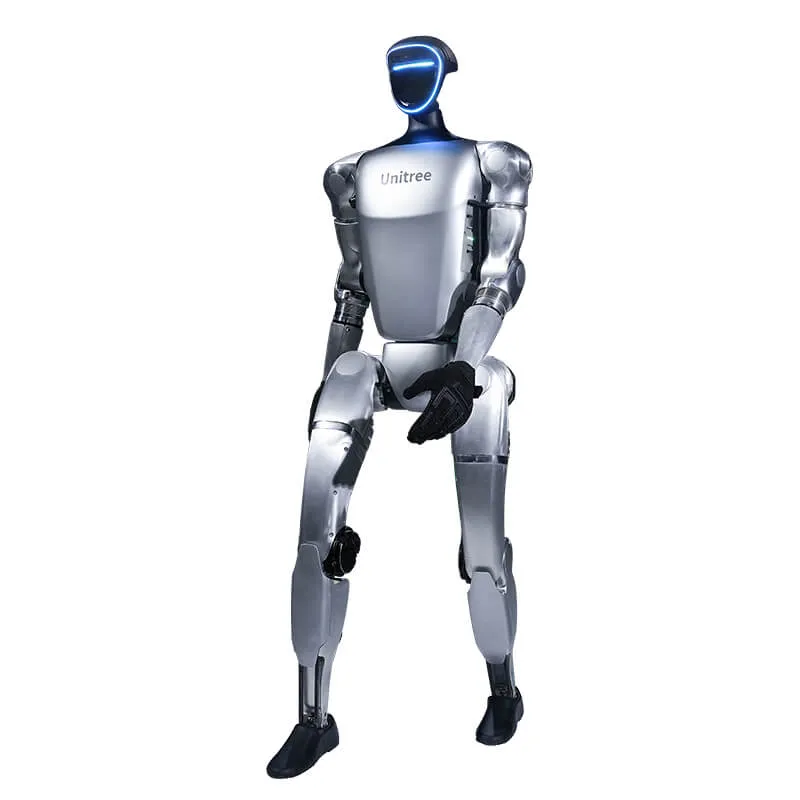
Unitree lists the standard G1 at $13,500, excluding tax and shipping. Its store explicitly directs secondary-development customers to EDU. Treat the basic G1 as a purchase for its delivered functions; do not buy it assuming that high-level SDK development is included. Unitree official store.
The manufacturer's comparison lists 23 joints for G1 and a configurable 23–43 for G1 EDU. Both list depth sensing and 3D LiDAR, so LiDAR alone is not the distinguishing EDU feature. Optional hands, additional joints and compute change the actual package. Manufacturer load figures also depend on arm posture. Unitree G1 specification table.
For EDU, ask the seller to attach the precise software scope to the quotation: supported joint command modes, firmware version, hand interface, example programs and any restrictions. The official SDK2 repository is a useful reference to inspect with your engineer; it is not a license or compatibility promise for every robot advertised as G1.
Comparing G1 with larger platforms
| Candidate | Documented distinction | Reason to investigate | Decision still needed |
|---|---|---|---|
| G1 standard | 23 joints; no secondary development | Delivered demonstrations where programming is not required | Exact delivered functions and operating conditions |
| G1 EDU | Development family with configuration-dependent joints and options | A compact biped for a defined control or manipulation project | SDK scope, hands, compute and complete bill of materials |
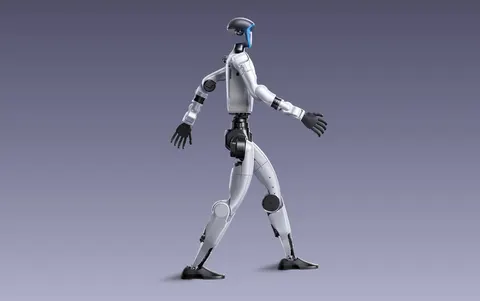
| H1 | Manufacturer lists approximately 1.8 m and 47 kg | A project that specifically needs a larger biped | Whether its arm layout and development package fit the experiment |
| H1-2 | Manufacturer lists approximately 1.78 m, 70 kg and seven joints per arm | A larger body with a different manipulation layout | Workspace, integration effort and the exact hand option |
H1 and H1-2 are different configurations, not interchangeable names. Their physical figures above come from Unitree's H1/H1-2 comparison; they do not establish success on a research task. For other manufacturers, use the same access checklist rather than assuming that a higher joint count provides the same control interface.
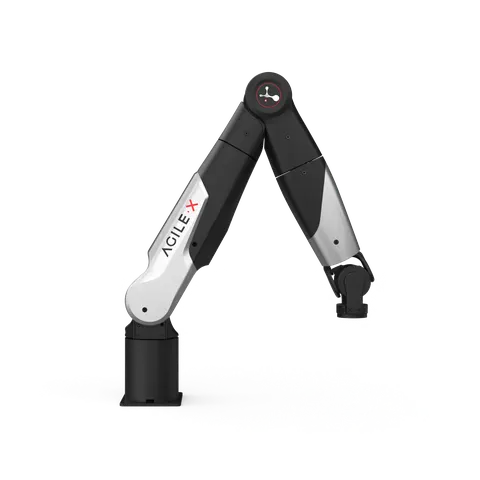
If walking is not part of the experiment, compare a research arm such as AgileX NERO and the under-$10,000 arm shortlist. A stationary setup may simplify resets and let more of the budget go to cameras, end effectors and data collection.
What the current Sourcebotics G1 EDU quote covers
As reviewed on 2026-09-15, our G1 EDU configuration page lists equipment prices from $25,300 for U1 to $46,200 for U6. These are Sourcebotics configuration prices, not Unitree's public list prices or a universal price range for all EDU packages. Use that page for the individual U1–U6 hand and joint configurations.
For one U1 Standard unit, the published equipment-plus-standard-shipping totals are $26,300 to Singapore, $27,300 to the United States or Germany, and $28,300 to Dubai. Import duties, import taxes and optional transport insurance are additional. Other configurations, quantities and destinations need their own shipping quotation. U1 configuration and shipping scope.
The listed production estimate is approximately one month before dispatch; international transit is additional. Use the agreed order terms for your schedule. A grant deadline should refer to arrival and commissioning dates, not a factory dispatch estimate.
Compare offers on the same scope
Send each seller the same requested configuration. Ask them to mark each item as included, optional, excluded or unresolved:
- Robot version, body joints, hands, wrist joints, compute and sensors.
- Controller, charger, battery quantity, cables and mechanical accessories.
- Software access, example code, documentation language and support scope.
- Delivery destination, shipping terms, tax responsibility and quotation expiry.
- Acceptance procedure, warranty exclusions, repair location and return-freight responsibility.
Do not convert the difference between two robot-package prices into a standalone hand price: multiple parts and services can change together. Use the public research robot procurement checklist to compare quotations, then request a configuration-specific quote.
Sources and review scope
The store, manufacturer comparison pages and SDK repository linked above were reviewed on 2026-09-15 for purchase restrictions, configuration distinctions and the quoted physical specifications. Sourcebotics equipment and shipping figures were checked against the site's current G1 EDU offer. This article does not report independent tests, certify a platform or promise delivery outside the agreed quotation.
FAQ
Can I develop software on the cheapest G1?
Unitree's current store says the standard product does not support secondary development. Specify EDU and have the required software scope confirmed for the exact configuration.
Does every G1 EDU include dexterous hands?
Do not assume so. The family contains different joint and hand configurations; request the bill of materials and the full hand model names.
Is a published SDK enough to approve a purchase?
No. Confirm that the delivered hardware and firmware support your required commands and that you have the necessary access. Review a reproducible example with the supplier.
Does a higher price mean better autonomous capability?
Price can reflect hardware, accessories, software access and service. Ask for a demonstration of the specific task with its human assistance and operating conditions disclosed.
Planning a robotics purchase? Share the quantity, configuration and destination so we can check fit, availability and quote requirements.
Request a quote— The Sourcebotics sourcing desk