How Much Does a Humanoid Robot Cost in 2026?
Source: https://sourcebotics.com/guides/how-much-does-a-humanoid-robot-cost-2026/
TL;DRSeparate the robot's equipment price from the cost of a usable project. Unitree publicly lists the standard G1 at $13,500, but it does not support secondary development. Sourcebotics currently lists configured G1 EDU equipment from $25,300 to $46,200. Hands, compute, software scope, delivery and the work required for your application determine the final budget; no single “all-in humanoid cost” applies to every lab or factory.
A current price reference with a clear scope
| Purchase | Price basis | What the figure does not establish |
|---|---|---|
| Standard Unitree G1 | $13,500 on the manufacturer's store | A development configuration, shipping, taxes or your application |
| Sourcebotics G1 EDU U1–U6 | $25,300–$46,200 equipment prices across the listed configurations | A universal EDU market range or the same accessories in every package |
| Factory application or research integration | Requires a defined scope and quotation | Guaranteed autonomy, uptime or payback from a hardware price |
The standard G1 reference and secondary-development restriction come from Unitree's official store, reviewed on 2026-09-15. The EDU figures are our current configuration prices, not Unitree's public list price. Use the G1 research-platform guide to determine the required access before choosing a price point.
What one U1 delivery example includes
For one G1 EDU U1 Standard, Sourcebotics publishes an equipment price of $25,300 and fixed standard shipping of $1,000 to Singapore, $2,000 to the United States or Germany, and $3,000 to Dubai. Equipment plus standard shipping is therefore $26,300, $27,300 or $28,300 respectively. Import duties, import taxes and optional transport insurance are additional.
This scope applies to one U1 and one delivery address in the listed destinations. Other configurations, quantities and destinations receive a separate shipping quote. See the U1 offer and delivery conditions for the current terms. The published production estimate is approximately one month before dispatch; transit is additional.
Build the rest of the budget from requirements
| Cost group | Items to specify |
|---|---|
| Robot configuration | Body joints, hands, wrists, compute, sensors and battery quantity |
| Experiment setup | Fixtures, teleoperation equipment, cameras, host computers and mounting |
| Software work | Required interfaces, policies, calibration, data collection and integration deliverables |
| Operation | Supervision, training, workspace preparation and maintenance |
| Service | Spare parts, repairs, freight responsibility and support scope |
| Delivery | Packing, destination, delivery terms and applicable import costs |
Do not apply a universal percentage for hands, software or support. Obtain prices for the configuration you need, and keep unknown items visible until they are resolved. The hand price guide explains why a standalone hand and a robot-package upgrade are different purchases.
Assess total cost without assuming labor replacement
For a research project, include the staff time and equipment needed to produce the required experiment. For an industrial pilot, measure task completion, intervention, uptime, maintenance and integration work under the intended operating conditions. Use those observations in the humanoid total-cost worksheet.
A robot purchase does not itself establish that a job can be removed or that an extra shift doubles savings. Any payback calculation should use the work actually automated, the supervision still required and the complete operating costs. A proposed subscription also needs clear service, usage and termination terms before it can be compared with ownership.
Prepare a comparable quote request
Give each seller the same model configuration, required software access, application, quantity and destination. Ask them to separate included equipment, options, engineering work, delivery and unresolved import costs. Require an acceptance procedure and a statement of the agreed support and repair terms.
Use the public procurement checklist to collect this information, then request a humanoid configuration quote.
Sources and review scope
The Unitree store and Sourcebotics configuration and U1 offer pages were reviewed on 2026-09-15 for the stated prices and scope. Budget categories are editorial guidance. This page does not provide tariff rates, independent deployment benchmarks or a forecast of future hardware prices.
FAQ
Is the cheapest G1 a research development platform?
Unitree's current store says the standard model does not support secondary development. Specify an EDU configuration and confirm the software access required by your project.
Do the EDU prices include delivery and taxes?
The equipment prices and U1 shipping examples above have different scopes. Import duties, taxes and optional transport insurance are additional to the listed U1 equipment-plus-shipping totals.
What does a factory-ready humanoid cost?
There is no substantiated universal figure in this guide. Define the application and obtain separate hardware, integration and operating estimates, then validate assumptions through a pilot.
Planning a robotics purchase? Share the quantity, configuration and destination so we can check fit, availability and quote requirements.
Request a quote— The Sourcebotics sourcing desk
Products to investigate
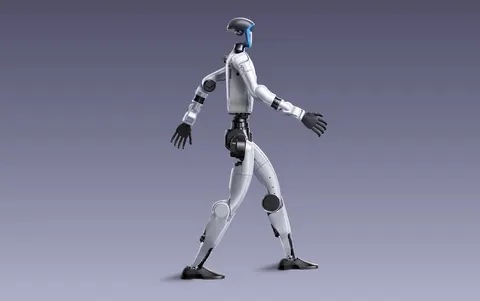
- Standing dimensions
- 1320 × 450 × 200 mm
- Weight
- About 35 kg including battery
- Body DoF
- 23