
QDD Robot Actuator & Joint Module Price Guide
Source: https://sourcebotics.com/guides/robot-actuator-joint-module-price-guide/
TL;DRBuild an actuator shortlist by continuous torque, revision, bus and thermal limits. Compare documented AK80-9 and ROBSTRIDE options and request a complete integration quote.
What “quasi-direct drive” means for a buyer
QDD usually describes a motor combined with relatively low-ratio reduction. The useful purchasing questions are how the joint behaves under load, how much resistance it presents when backdriven, and which control modes the complete drive supports. The name alone does not establish a ratio, a torque-control bandwidth or a price tier.
Ask for the motor, reducer, encoder and driver as an explicit bill of materials. An integrated actuator listing and a motor/reducer assembly without its controller are different purchases even when the product photographs look similar.
Published price references and revision boundaries
| Reference | Public price evidence | What to verify before using the number |
|---|---|---|
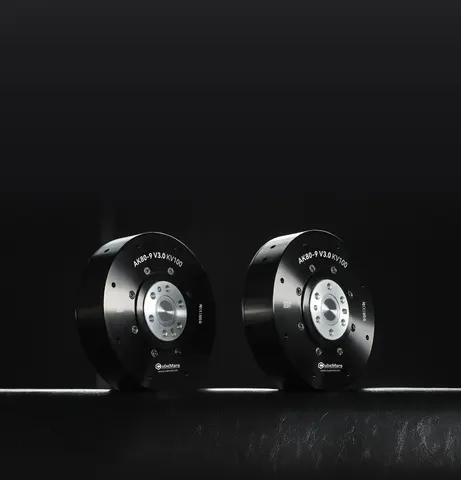
| CubeMars AK80-9 V3.0 KV100 | Manufacturer catalog lists $479.90–$579.90 across options | Driver-board selection, accessories, shipping and tax scope |
| Unitree GO-M8010-6 | Unitree's official store catalog displays $369 | Complete package, applicable options, interface accessories and delivery terms |
| CubeMars AK80-9 classic | Sourcebotics retains a separate classic model record | Request a revision-specific quotation; do not substitute a V3.0 price or datasheet |
The first two figures were checked on 2026-09-15 against the CubeMars product catalog and Unitree official store. They are seller-published reference prices, not confirmation of stock, a delivered cost or an offer from Sourcebotics.
The AK80-9 V3.0 product page identifies 9:1 reduction, 9 N·m rated torque and 22 N·m peak torque. Its selectable driver-board option matters to the price. Keep the revision, KV and driver configuration together in your quotation; an older “AK80-9” paper or catalog entry does not establish those V3.0 figures.
Size the joint to a load case
A torque number without speed, duration and thermal conditions is not enough to size a joint. Give the supplier a load case that includes:
- Output torque and speed throughout the motion, including acceleration and stopping.
- Time spent holding position, repeated cycles and expected rest periods.
- Ambient temperature, enclosure and mounting or cooling arrangement.
- Supply voltage, available current and power-system constraints.
- External radial and axial loads, required stiffness and allowed lost motion.
Compare the required operating envelope with the manufacturer's curves and limits. Peak torque is not a continuous operating point. A rated figure also needs its test conditions; it does not guarantee indefinite output inside a different enclosure.
For early selection, ask which load case is limiting and what evidence supports it. If the supplier cannot provide the necessary thermal or mechanical information, record that as an unresolved engineering requirement before ordering a set.
Compare architectures without blanket rules
| Design choice | Useful questions | Avoid assuming |
|---|---|---|
| Low-ratio planetary / QDD | Backdrive torque, friction, control modes and thermal limits | That all QDD modules are equally backdrivable or impact tolerant |
| Higher-ratio planetary | Lost motion, efficiency, bearing loads and cycle life | That the same peak torque produces the same dynamic behavior |
| Strain-wave / harmonic joint | Reducer and bearing limits, stiffness, repeatability, brake needs | That every integrated joint has zero system error or is suitable for every precision task |
| Cycloidal / RV joint | Output-load ratings, stiffness, lubrication and installation requirements | That reducer specifications describe the full motor-drive assembly |
These are questions for model-specific evidence, not a universal cost ranking. The required encoder arrangement, sealing, brake, driver and support can change the package substantially.
The control interface can change the real budget
Request the protocol for the exact drive revision, with units, sign conventions, device addressing, feedback fields and supported command modes. Record the required host adapter and firmware. Similar CAN connectors do not imply compatible protocols; CAN FD support must be explicit.
For Unitree GO-M8010-6, inspect the official actuator SDK and matching motor manual rather than assuming another QDD module's interface transfers. The SDK also distinguishes rotor-side from output-side quantities; record the convention used by your controller. For a broader bus decision, see EtherCAT vs CAN FD, then validate the selected drive's own documentation.
“MIT mode” is a product control-mode label, not proof that an existing controller will work without changes. Ask the engineer to inspect command limits, gains, feedback timing and error handling before approving a substitution.
Build a complete per-joint quotation
Separate actuator assembly, driver, communications adapter, cables, power supply, mechanical mounts and any commissioning work. Quote proposed spares separately. State the quantity and whether every joint uses the same winding, reduction and firmware.
For a sample order, define a safe acceptance procedure with the supplier: identify the hardware and firmware, confirm communications and feedback, and then perform the agreed load test within the documented limits. Record results before committing to a larger set. No fixed bulk discount, lead time or spare percentage is assumed here.
Use the procurement checklist to share the load case and unresolved questions, browse actuators and joint modules, or request a QDD configuration quote.
Sources and review scope
The CubeMars catalog and V3.0 page and Unitree store linked above were reviewed on 2026-09-15 for public prices and specified configuration details. The classic AK80-9 record remains a separate historical revision; its specifications have not been reclassified as V3.0. The selection checklist is editorial guidance, not independent actuator testing.
FAQ
What does a QDD actuator cost?
Current public references above include CubeMars AK80-9 V3.0 options at $479.90–$579.90 and a $369 Unitree GO-M8010-6 store listing. These are individual product references, not a market-wide price range or complete system costs.
Can I replace a classic AK80-9 with V3.0?
Do not assume a drop-in replacement. Check drawings, connectors, driver, protocol, firmware and torque-speed limits for both revisions.
Should I design to rated or peak torque?
Start with the full duty cycle and the manufacturer's thermal and mechanical limits. Neither one number nor the word QDD establishes a usable continuous operating envelope.
Does the listed price include the driver?
It depends on the selected option. Require the controller and accessory model numbers in the quotation.
Planning a robotics purchase? Share the quantity, configuration and destination so we can check fit, availability and quote requirements.
Request a quote— The Sourcebotics sourcing desk
Products to investigate
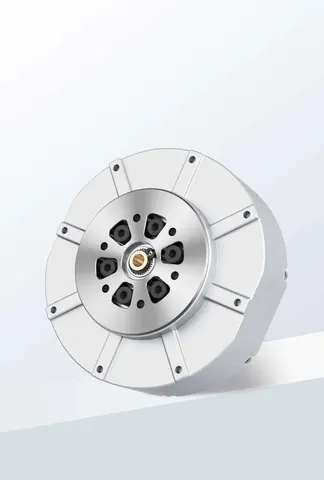
- Peak Torque
- 23.7 N.m
- Torque Constant
- 0.63895 Nm/A
- Max Speed
- 30 rad/s @24 VDC