
Robot Reducers from China: How to Choose Harmonic, Planetary and RV Gearboxes
Source: https://sourcebotics.com/guides/reducers-transmissions-buyers-guide/
Short answerChoose the reducer type from the joint's job, then compare models of that type at the same frame size. Harmonic reducers suit compact, precise arm and humanoid joints; planetary reducers suit back-drivable and high-speed axes; RV reducers suit heavily loaded base and shoulder joints. Confirm ratings, test conditions and drawings in writing before ordering.
What to check first
A reducer is sized against the joint, not against a catalog headline. Before you contact suppliers, write down the output torque profile of the joint (continuous load, acceleration peaks and the worst emergency stop), the output speed range, the input speed of your motor, the space available and whether cables must pass through the centre. With those five facts you can shortlist a type and a frame size, and every quotation can be checked against the same requirement.
Then read each candidate's catalog page for the following items, in this order:
- Type and construction. Component set (you build the housing and bearing) or complete unit with an integrated output bearing and housing.
- Ratio. The available ratios for the frame size, and whether the ratio you need is a standard or special order.
- Torque ratings. Rated torque, the limit for repeated start and stop, and the momentary limit for collisions or emergency stops. Each has its own test condition.
- Precision. Backlash or lost motion, and the load and temperature at which it was measured.
- Stiffness. Torsional stiffness, which decides how far the output deflects under load and therefore how accurate the joint is when it carries a tool.
- Life. Rated life with the load and input speed it assumes.
- Interfaces. Input shaft or motor adapter, output flange, mounting holes, hollow bore diameter and the 2D drawing or 3D model you will design against.
| Type | Strengths | Trade-offs | Common robot joints |
|---|---|---|---|
| Harmonic (strain wave) | High ratio in one stage, low backlash, compact and light, hollow-shaft versions available | Flexspline fatigue limits momentary overloads; stiffness is lower than RV at small deflections | Collaborative and light arms, humanoid arms and wrists, dexterous hand drives |
| Planetary | High efficiency, good back-drivability at low ratios, wide range of sizes and prices | High ratios need several stages; precision varies widely by grade | Legged robot joints, quasi-direct-drive actuators, mobile robot wheels |
| RV (cycloidal two-stage) | High shock tolerance and stiffness, large integrated output bearing | Heavier and larger for a given ratio; higher cost per joint | Industrial robot bases, shoulders and elbows, positioners |
Trade-offs between the three types
Harmonic reducers win when space and mass are tight. They reach a high ratio in a single stage, carry little backlash and often come with a hollow shaft for cable routing, which is why they dominate light arms and humanoid upper bodies. The cost is overload tolerance: the thin flexible spline is a fatigue part, so repeated impacts above the momentary rating shorten its life. Size harmonic joints with a margin for collisions, and ask how the supplier defines the momentary limit.
Planetary reducers are the efficient, forgiving choice. At low ratios they can be back-driven by hand and transmit motor current to output torque with little loss, which lets the controller estimate contact forces. That is why legged robots and quasi-direct-drive joints favour them. To reach the ratios of a harmonic drive they need two or three stages, which adds length and backlash, so precision grades matter when you compare offers.
RV reducers carry the heaviest loads. Their two-stage design shares the load across many pins and includes a large output bearing that supports tilting moments directly. They tolerate shock well and stay stiff, which makes them standard in industrial robot bases and shoulders. Expect more weight and a higher price per joint than a harmonic unit of similar output torque.
Typical ranges and how to compare them
Ratings scale with frame size, so a fair comparison holds frame size and ratio constant. Two suppliers' "size 20" harmonic units are comparable only if their outer diameters and mounting dimensions match your design. Within one frame size, a higher ratio usually raises the rated torque slightly and lowers the maximum output speed.
Precision figures are the most easily misread. One catalog may state backlash at no load, another lost motion within a small torque band, another positioning accuracy over a full revolution. These are different measurements. When the catalog does not say how a figure was measured, ask before you compare it. The same applies to rated life, which only means something with the load and input speed attached.
On Sourcebotics, reducer model pages and comparisons list only figures that appear in the manufacturer documents cited for each model, with units, so you can see which values are stated and which you still need to request.
Checklist for a reducer inquiry
- Joint torque profile: continuous, repeated peak and emergency-stop torque at the output.
- Output speed range and motor input speed.
- Reducer type, frame size and ratio; component set or complete unit.
- Precision requirement: backlash or lost motion, with the measurement condition you need.
- Stiffness requirement if the joint carries a tool or camera.
- Rated life target with your load and duty cycle.
- Interfaces: motor adapter, output flange, hollow bore and mounting pattern.
- Documents: current catalog page, 2D drawing, 3D model and lubrication instructions.
- Quantity, destination and required delivery date.
Send the same checklist to every supplier you are considering, so the quotations can be compared line by line.
Sources
FAQ
Can I replace an established-brand harmonic reducer with a Chinese one of the same size?
Many Chinese series follow common frame sizes, but mounting dimensions, tolerances, lubrication and ratings differ between series. Compare the drawings and ratings against your current design before treating a part as a drop-in replacement.
Should I buy a component set or a complete unit?
A component set is lighter and cheaper but requires you to design and machine the housing, bearing and seals accurately. A complete unit includes the output bearing and housing, which shortens design time and reduces assembly risk for low and medium volumes.
How many samples should I evaluate?
Order enough units to test the joint you are designing under its real duty cycle, and keep one approved unit as a reference for later production orders.
Which documents prove a reducer's ratings?
The manufacturer's catalog or datasheet for the exact series and ratio, together with the test conditions behind each rating. For production orders, agree the inspection report you will receive with each batch.
Planning a robotics purchase? Share the quantity, configuration and destination so we can check fit, availability and quote requirements.
Request a quote— The Sourcebotics sourcing desk
Related products
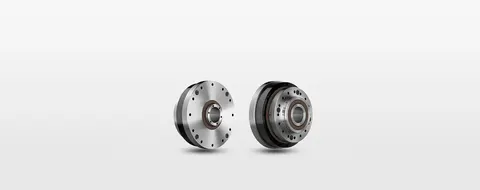
- Type
- Hat-type hollow harmonic reducer unit with output bearing
- Backlash
- Zero backlash
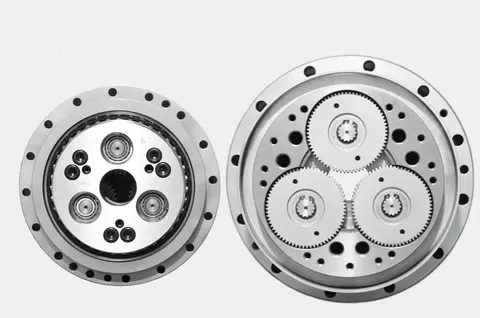
- Type
- Two-stage cycloidal (RV) precision reducer
- Reduction Ratio
- 1/61
- Rated Torque
- 150 N·m
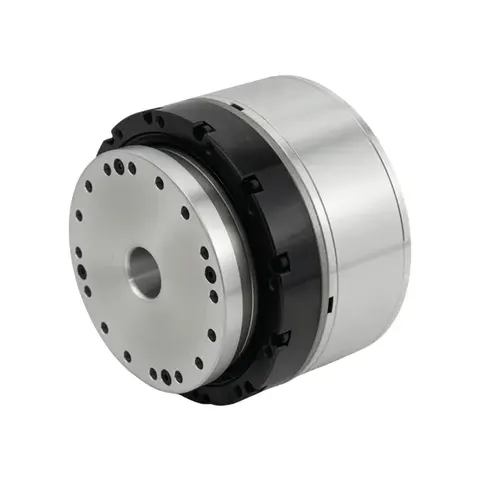
- Type
- Integrated DC harmonic actuator module
- Frame Size
- 110 mm class
- Voltage
- DC low-voltage
- Type
- Cup-type harmonic gear component set
- Backlash
- Zero backlash