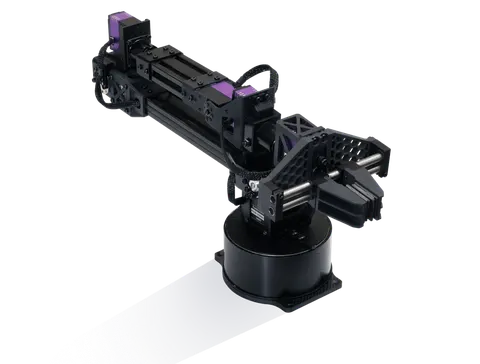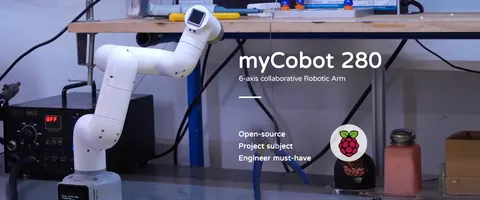
Elephant RoboticsmyCobot 280 M5 2023
- Degrees of freedom
- 6
- Payload
- 250 g
- Working radius
- 280 mm
Price on request
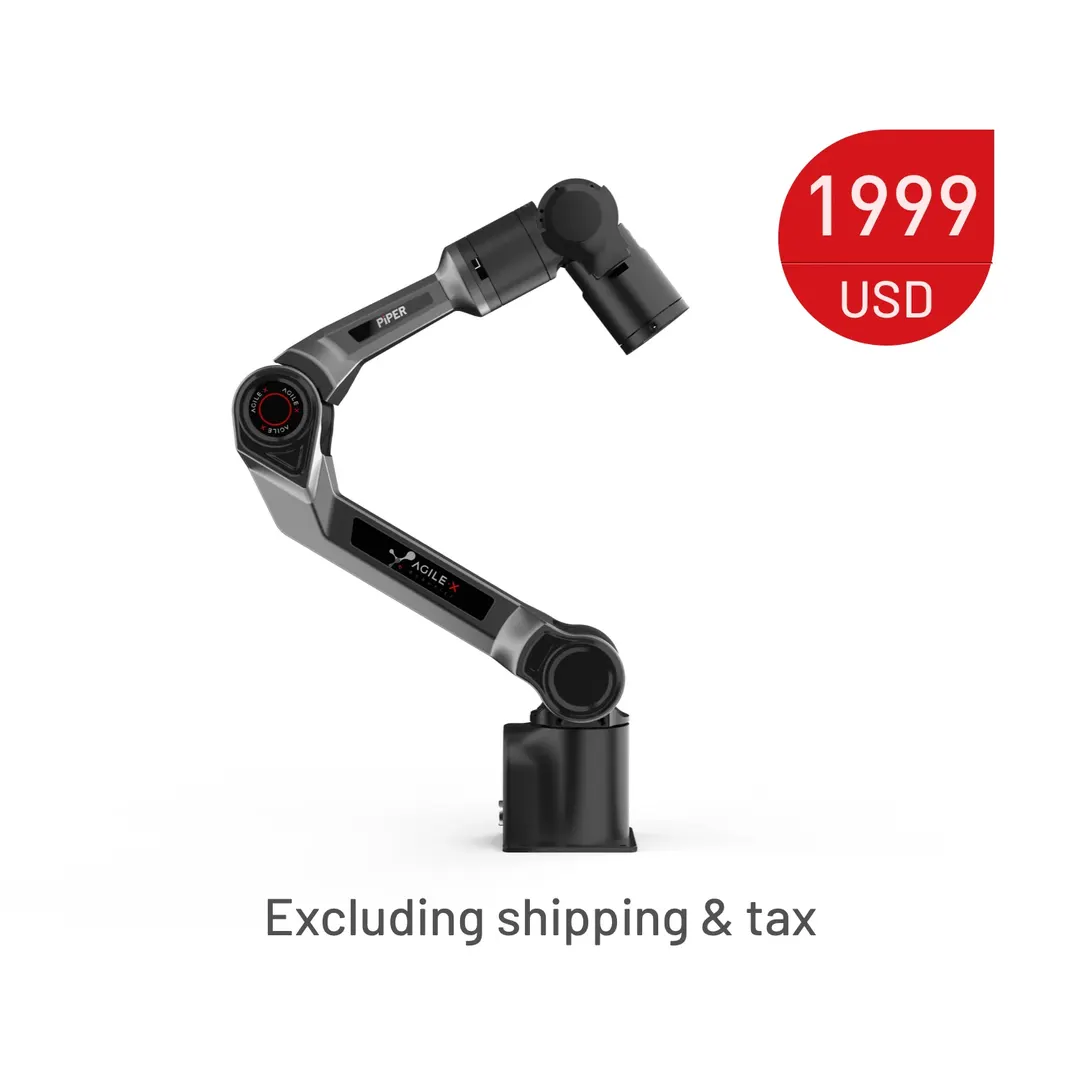
Lightweight six-axis arm for manipulation research and integration projects. PiPER combines a 1.5 kg payload, 626 mm reach and a CAN control interface with an official Python SDK and ROS support.
Sourcebotics selection notes, based on the published documentation.
The original PiPER has six arm axes. AgileX's product listing reports 626 mm reach and 1.5 kg payload. PiPER-X is a separate model; use the original PiPER's drawings and software setup when reviewing this listing.
For a manipulation bench, describe the wrist assembly before selecting the arm: gripper, adapter, camera, cables and handled object. Ask for the proposed poses and motions to be assessed with that complete load. The headline payload does not establish an allowable tool moment at every pose.
The official Python SDK manual documents a 1 Mbit/s CAN setup. Its setup scripts assume the manufacturer's CAN module, and the README associates SDK 0.0.x with firmware earlier than V1.5-2. It also points to the newer pyAgxArm path. Those references should be matched to the delivered firmware, rather than mixed into one generic compatibility claim.
Include the adapter part number, host OS, SDK release and firmware in the purchase requirements. Ask which position, feedback and other command modes your experiment can use, with an example for that combination. For leader–follower data collection, identify the extra arm or teaching hardware, gripper controls, timestamps and exported log format separately.
Ask for an itemized scope: arm revision, power supply, CAN adapter, cables, end effector, base fixture and any teleoperation hardware. Put integration support and the demonstration deliverables on separate lines so two proposals can be compared on the same basis. Confirm the electrical manual and connector pinout for the supplied unit before designing the installation.
Use the research-arm budget guide for the complete station, and the VLA interface checklist if you intend to collect demonstrations or run a policy. The procurement worksheet helps record the remaining quote inputs.
Documentation reviewed 13 October 2026. This is an integration planning note, not a hardware test or a verified SDK build. Supply voltage, connector details, load conditions and the complete delivered package still require configuration-specific confirmation.
| Payload | 1.5 kg published payload; rated/peak distinction and test posture not specifiedReference ↗ |
| Reach | 626 mmReference ↗ |
| Degrees of freedom | 6Reference ↗ |
| Arm weight | 4.2 kgReference ↗ |
| Repeatability | 0.1 mm, manufacturer specificationReference ↗ |
| Interface | CANReference ↗ |
| Software | Official public Python SDK; manufacturer states ROS 1 / ROS 2 support; no integration testReference ↗ |
| SDK revision | Match firmware, CAN adapter and SDK; legacy SDK and pyAgxArm are separate documented pathsReference ↗ |
Manufacturer specifications for the listed model. Confirm options, operating conditions and integration requirements in your configuration-specific quotation.
AgileX Robotics develops mobile robot chassis, robot arms and mobile manipulation kits. Its current contact office is in Dongguan. Compare PiPER, PiPER-X and NERO by the exact arm revision, controller, software requirements and integration scope.
Manufacturer and distributor references for model selection and technical review. Specification sources last reviewed: September 14, 2026.
Specify the exact model or variant, required interfaces and accessories, quantity and delivery destination. Use the quotation to confirm the supplied configuration, current availability and commercial terms.
Ask for the current datasheet, delivery schedule, warranty scope and any documentation required for your destination. Use our procurement checklist to prepare the requirements, or download the worksheet.
Discuss this configurationSpecify arm quantity, grippers, CAN adapter, power supply and any leader–follower teleoperation hardware in the quotation.
Confirm firmware and SDK compatibility, total end-of-arm mass and the loaded task test. Agree system-level safety measures for the proposed installation.
No. The reviewed SDK setup assumes the manufacturer CAN module and a 1 Mbit/s configuration. Ask for the tested adapter, firmware and SDK release together.
Considering AgileX PiPER? Share the quantity, configuration and destination so we can check fit, availability and quote requirements.
Request a quote— The Sourcebotics sourcing desk