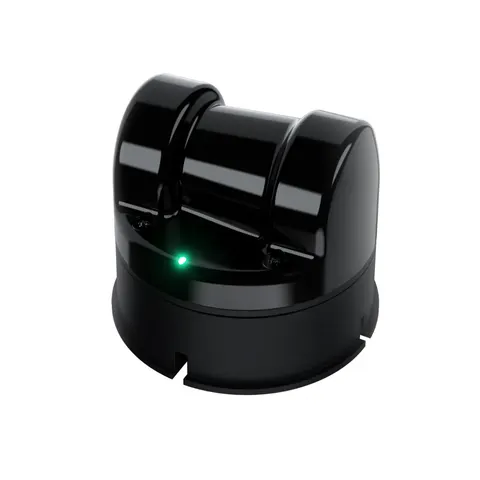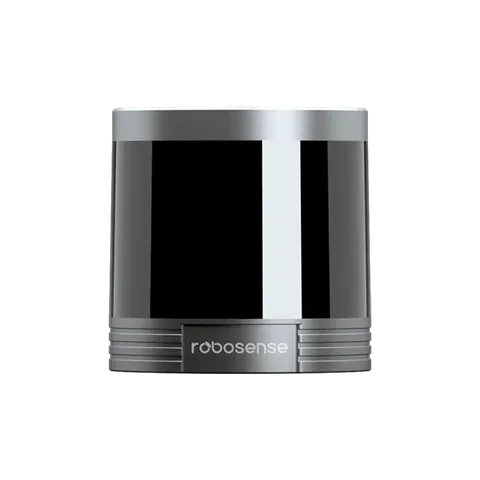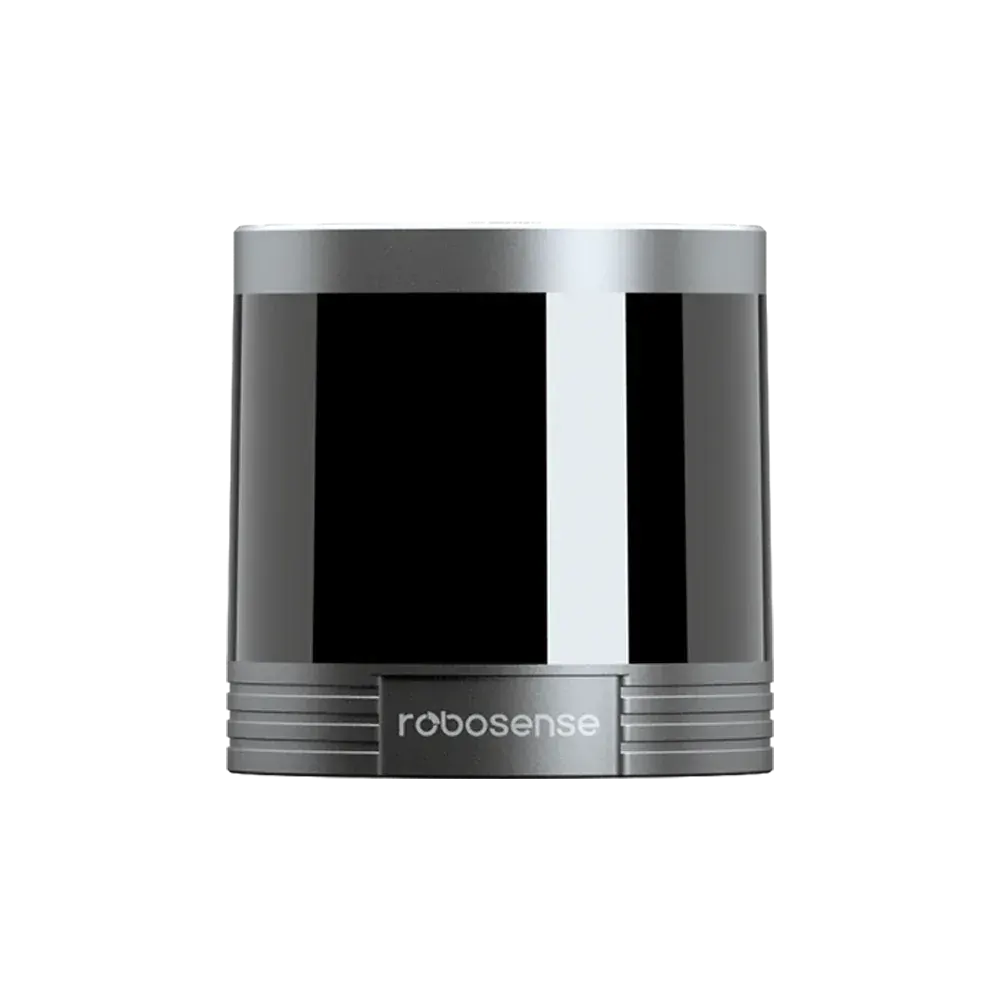
RoboSense Airy
Compact hemispherical digital LiDAR purpose-built for robots — 360° × 90° FOV, 60 m range, 860k pts/s on the 96-beam SKU, under 240 g at Φ60 × 63 mm, IP67, drawing under 8 W.
Full specifications
Last verified: 2026-07| Detection range | 60 m† |
| Range precision | ±1 cm (1σ)† |
| Point rate | 860,000 pts/s (96-beam) · 1.72M pts/s on the 192-beam variant† |
| FOV | 360° horizontal × 90° vertical hemispherical† |
| Weight / size | <240 g · Φ60 × 63 mm† |
| Power | <8 W† |
| Ingress protection | IP67† |
| Interface | Ethernet† |
| Price band | ≈$1,100–1,260 retail† |
| MOQ | 1 unit† |
† Manufacturer-reported, not yet independently verified.
Fits with
Confirmed and manufacturer-claimed platform compatibility. We check your exact wrist and communication setup before quoting.
Supplier
RoboSense, founded in 2014 in Shenzhen and listed in Hong Kong, designs lidar hardware together with in-house SoC chips such as M-Core. Product families include the Helios mechanical series for robotics and mapping, the MX and M-platform automotive scanners, and the fully solid-state E1 blind-spot sensor.
Downloads
FAQ
Airy or Livox Mid-360?
Both are ~240–265 g hemispherical SLAM sensors. Airy claims a wider 90° vertical FOV, higher point density (860k pts/s on the 96-beam) and ±1 cm precision; the Mid-360 has a longer 40 m @10% range and the more mature open-source SLAM ecosystem. For indoor robots that need dense near-field coverage, Airy is compelling; verify driver/ROS support for your stack first.
What's the difference between the 96- and 192-beam versions?
Beam count sets vertical resolution and point rate — 860k pts/s (96-beam) vs 1.72M pts/s (192-beam). The 96-beam is the mainstream robotics SKU and what this listing prices; specify the variant on your RFQ.
Related models
Sourcing a product featured in this guide? Tell us the model, quantity, and destination—we'll reply within 24 hours with landed-cost options and current availability.
Request a quote— The Sourcebotics sourcing desk