Service Robots from China: How to Choose Delivery, Cleaning and Outdoor Logistics Robots
Source: https://sourcebotics.com/guides/service-special-robots-buyers-guide/
Short answerChoose a service robot by the job and the building it works in, then compare models on the figures that describe real operation: practical cleaning rate, payload and compartment volume, runtime and the doors, lifts and networks it depends on. Plan for consumables, software accounts and local service from the start. For outdoor delivery vehicles, check the local rules on where they may operate before anything else.
Match the robot to the job
Chinese service robot makers sell into restaurants, hotels, hospitals, offices, airports, factories and campuses. Their product lines fall into a few groups:
| Group | Typical job | Example models on Sourcebotics | What to compare |
|---|---|---|---|
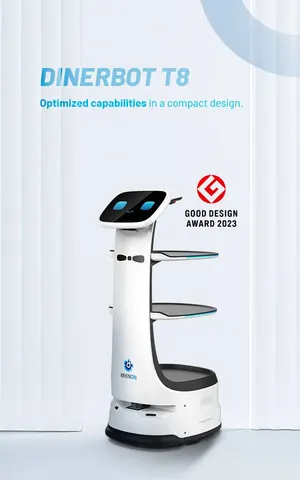
| Indoor delivery | Carrying dishes, room deliveries or parcels inside one building | KEENON DINERBOT T8, PUDU BellaBot Pro, YUNJI GOGO, OrionStar LuckiBot Pro | Payload, tray or compartment size, lift and door integration, runtime |
| Industrial delivery | Moving materials between stations in factories and warehouses | PUDU T150, PUDU T300 | Payload, navigation in changing layouts, docking and handover |
| Commercial cleaning | Scrubbing, vacuuming and sweeping large floor areas | Gausium Scrubber 50, PUDU CC1, KEENON KLEENBOT C30, YUNJI UP C40 | Practical cleaning rate, cleaning width, tank volumes, floor types |
| Outdoor delivery and RoboVans | Last-mile and campus logistics on roads and paths | Neolix X3, Zelos Z5, Segway E1 | Permission to operate, payload, cargo volume, remote supervision |
| Inspection | Patrolling indoor facilities and reading instruments | YIJIAHE SI300 | Sensors carried, route and reporting, integration with alarms |
Write down where the robot will work, what it carries or cleans, how many hours it runs each day and who on site will look after it. That is enough for a maker to propose a model and a trial.
Cleaning robots: compare practical rates
Cleaning robot datasheets often state a theoretical maximum cleaning rate: cleaning width multiplied by speed, with no turns, obstacles or refills. Gausium publishes both that figure and a practical range for several models, and the gap is large.
| Model | Cleaning width | Theoretical maximum | Practical rate |
|---|---|---|---|
| Gausium Scrubber 50 | 460 mm (disc brush) | 1,987 m²/h | 500–1,300 m²/h |
| Gausium Scrubber 75 | 750 mm | 3,000 m²/h | 700–1,400 m²/h |
| Gausium Vacuum 40 | 720 mm (with side brushes) | 2,300 m²/h | 400–800 m²/h |
| Gausium Phantas S1 | 330 mm scrubbing, 465 mm vacuuming or sweeping | 1,188 m²/h scrubbing or dust mopping, 1,674 m²/h vacuuming or sweeping | 350–700 m²/h |
Figures from the Gausium specification pages for each model: Scrubber 50, Scrubber 75, Vacuum 40, Phantas.
For the Vacuum 40, the practical range is roughly a sixth to a third of the theoretical maximum. Use practical rates, or better, a trial in your own building, when you work out how many robots and how many hours you need. When a maker publishes only a theoretical figure, ask for the practical rate and the conditions behind it.
Beyond the rate, check:
- Floor types: hard floors, carpet, epoxy, tiles with grout lines, and which brushes, pads or modes each needs.
- Tanks and refills: clean and dirty water capacity, how often the robot must be emptied and refilled, and whether an automatic station is offered.
- Chemicals: which detergents the system accepts.
- Edges and obstacles: how close it cleans to walls and how it treats cables, glass and drops.
- Consumables: brushes, squeegee blades, filters and pads, with replacement intervals and local availability.
Delivery robots: payload, space and the building
For delivery robots, compare what the robot can carry and where it can go. YUNJI lists a 15 kg payload and a 40 L upper compartment for its GOGO hotel delivery robot (YUNJI GOGO brochure). PUDU lists a maximum payload of 150 kg for the T150 industrial delivery robot, with VSLAM and LiDAR SLAM localisation (PUDU T150).
Most indoor delivery projects depend on the building as much as on the robot:
- Lifts: integration needs hardware and agreement from the lift owner and maintenance contractor. Ask the maker which lift brands it has integrated with in your market and who installs the interface.
- Doors and gates: automatic doors, access control and fire doors that close on alarm.
- Network: Wi-Fi coverage along every route, or mobile data, and the ports the robot needs.
- Floors and thresholds: ramps, thresholds, carpets and the gaps at lift doors.
- People: crowded areas at peak times, and how the robot behaves when blocked.
Ask for runtime under your load, not only the no-load figure. YUNJI, for example, states the GOGO runtime as up to 8 hours under no-load conditions (YUNJI GOGO brochure). Charging time and charging station placement then decide how many robots cover a full day.
Outdoor delivery and RoboVans
Outdoor delivery robots and RoboVans run on public roads, pavements or private campuses. Whether and where they may operate depends on local rules. Confirm with the relevant authority and your insurer what permission is needed before you commit to a purchase. Then ask the maker about payload and cargo volume, the remote supervision service, data connectivity, the weather and temperature limits, and the service network in your country.
Software, data and local support
Service robots are usually managed through an app or cloud platform. Before ordering, confirm:
- Interface languages and voice prompts available for your market.
- Where cloud data, maps and camera images are stored, and how long they are kept.
- Remote access for support, and how you approve or limit it.
- Software subscription fees, if any, and what stops working without them.
- Integration with your own systems through an API, such as hotel property management or a building management system.
Local support decides uptime. Ask who installs the robot and maps the site, who repairs it, the response time, the spare parts held in your country and the warranty terms in writing. For more on service terms, see warranty, spare parts and RMA for Chinese robots.
What a complete quotation includes
- Robot with the exact configuration, trays, cabinets or cleaning modules.
- Charging station and any automatic refill, drain or dust station.
- Lift, door and network integration hardware and installation.
- Software platform and app accounts, with subscription terms.
- Site mapping, commissioning and staff training.
- Consumables pack, spare parts, warranty and service response times.
- Incoterm, delivery date and the battery shipping status.
Checklist for a service robot inquiry
- Job, site type and the floor plan with routes or cleaning zones.
- Loads to carry, or floor area and floor types to clean, with hours per day.
- Lifts, doors, access control and network along the routes.
- Runtime and charging needed to cover one working day.
- Languages, data storage location and integration requirements.
- Local installation, service, spare parts and consumables.
- For outdoor vehicles, the permission and insurance status at your site.
- Quotation scope as listed above and the trial you want before a volume order.
Sources
FAQ
Which cleaning rate should I use for planning?
Use the practical rate or the results of a trial on your floors. The theoretical maximum assumes uninterrupted cleaning in straight lines and overstates real output.
Can a delivery robot use any lift?
Not without integration. The lift needs an interface installed with the agreement of its owner and maintenance contractor. Ask the maker which lift brands it has worked with in your market.
Do service robots need an internet connection?
Many functions, such as remote management, updates and some lift integrations, rely on a network. Ask which functions continue offline and which stop.
Can I trial a robot before buying several?
Ask for a trial on your site with agreed success measures, such as deliveries per hour or cleaned area per shift, and confirm the trial unit matches the configuration you would order.
Planning a robotics purchase? Share the quantity, configuration and destination so we can check fit, availability and quote requirements.
Request a quote— The Sourcebotics sourcing desk
Related products
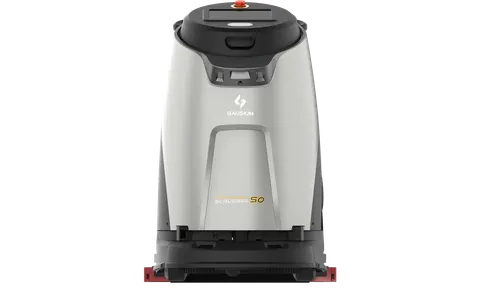
- Cleaning Width
- 460 mm (disc brush)
- Cleaning Efficiency
- 1987 m2/h theoretical; 500-1300 m2/h practical
- Clean Water Tank
- 30 L
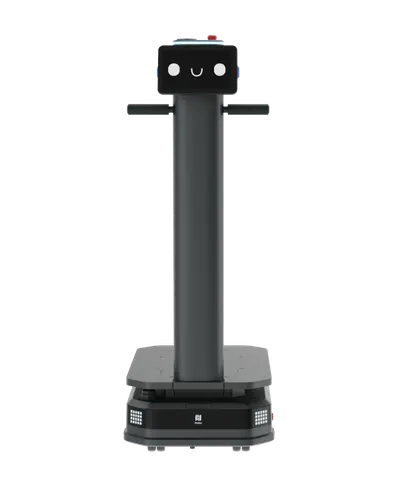
- Maximum payload
- 150 kg
- Machine weight
- 65 kg
- Navigation
- VSLAM + LiDAR SLAM
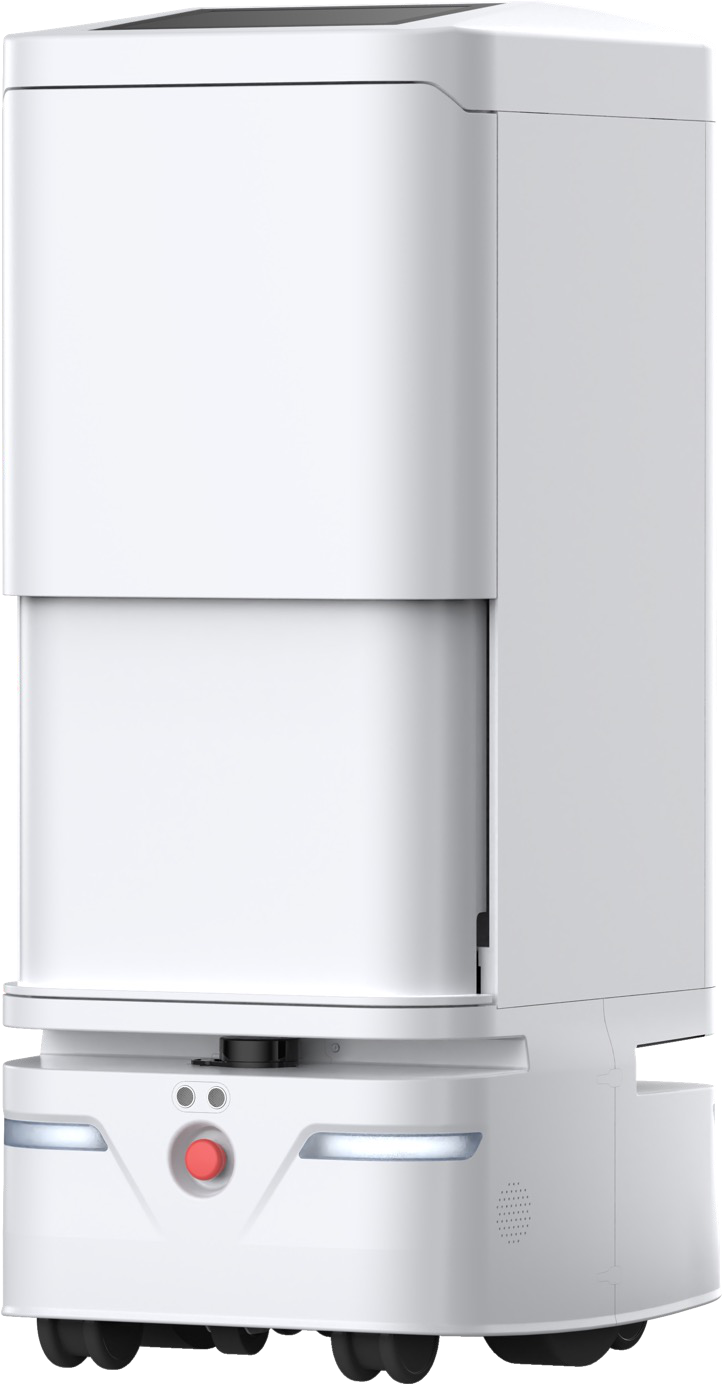
- Payload
- 15 kg
- Upper compartment capacity
- 40 L
- Runtime under no-load conditions
- Up to 8 hours