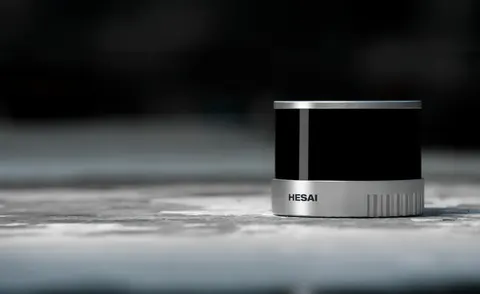
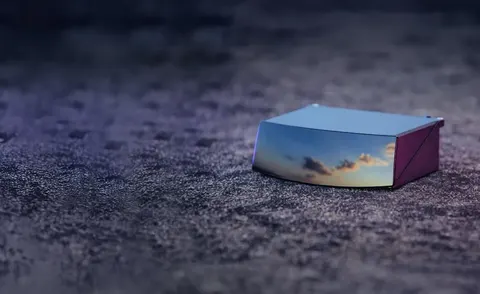
Livox Tele-15 Long-Range LiDAR

Directional LiDAR with 14.5° × 16.2° coverage, 320 m at 10% or 500 m at 50% reflectivity under 100 klx, and a built-in BMI088 IMU. Use the original Livox SDK generation and distinguish sensor power, converter input and cooling configuration.

Price on requestRequest an itemized Sourcebotics quotation for Tele-15, the exact hardware, cabling, power supply, software support, freight and taxes. Public documentation does not confirm current stock.
Detection range320 m at 10% reflectivity; 500 m at 50%; both at 100 klx
Field of view14.5° horizontal × 16.2° vertical
Point rate240,000 points/s first or strongest return; 480,000 points/s dual return
SDK generationOriginal Livox-SDK device enumeration includes Tele; do not substitute SDK2

Sourcebotics selection notes, based on the published documentation.

Application fit

  • Directional long-range point-cloud evaluation where a narrow field of view is appropriate.

Integration planning

  • Use original Livox-SDK and the legacy ROS drivers. SDK2 / ROS Driver 2 support for newer models does not establish Tele-15 compatibility.
  • 12 W is typical at 25°C; the manual lists 36 W startup and recommends a 12 V supply rated at least 36 W. Cold-start demand varies; the Chinese web note describes a roughly 20-second high-power interval.
  • The −40 to +85°C specification is for the cooling-module configuration. Removing it requires alternative cooling; the manual recommends ambient below 65°C and shell below 85°C.
  • Web table: 1.6 kg with cooling module / 1.5 kg without. Manual v1.2 p. 13: approximately 1.8 / 1.7 kg including cable; the 1.8 kg figure includes a 1.3 m, approximately 160 g cable. Measurement boundaries differ; confirm the supplied assembly mass.

Selection considerations

  • The historical 1000 m option is custom firmware, with current access and conditions unconfirmed. It is not the standard detection range.
  • Manual pp. 9/27 and current web tables specify Converter 2.0 input 9–30 V; troubleshooting p. 23 instead says 10–15 V for the converter. Confirm the actual converter rating; never apply its higher input range directly to the sensor.
  • Official launch was announced January 6, 2020, with global sale announced June 17, 2020. Historical availability does not establish current stock.
  • Livox lists 12 months for the relevant product family and limits service to the purchase region; this does not establish Sourcebotics warranty coverage for a particular shipment.

Technical specifications

Product documentation
SENSING AND RETURN MODES
Detection range320 m at 10% reflectivity; 500 m at 50%; both at 100 klxReference ↗
Field of view14.5° horizontal × 16.2° verticalReference ↗
Point rate240,000 points/s first or strongest return; 480,000 points/s dual returnReference ↗
Range precision reference (1σ)Web table: 2 cm at 20 m, 80% reflectivity and 25°C; manual provides separate distance-dependent precision bandsReference ↗
Angular precision (1σ)<0.03°Reference ↗
Laser905 nm; manufacturer reports Class 1 per IEC 60825-1:2014Reference ↗
POWER, COOLING AND MASS
Power12 W typical at 25°C; 36 W startup in manual table. Startup demand varies with temperature.Reference ↗
Supply voltageSensor 10–15 V DC; manual recommends 12 V and ≥36 W. Converter 2.0 input 9–30 V in specification table; conflicting troubleshooting wording noted below.Reference ↗
Dimensions112 × 94.2 × 122 mm with cooling module; 112 × 82.4 × 122 mm withoutReference ↗
Mass and measurement scopeWeb table: 1.6 kg with cooling module / 1.5 kg without. Manual v1.2 p. 13: approximately 1.8 / 1.7 kg including cable; the 1.8 kg figure includes a 1.3 m, approximately 160 g cable. Measurement boundaries differ; confirm the supplied assembly mass.Reference ↗
Operating temperature−40 to +85°C with self-dissipation module; removal requires alternative cooling and changes the thermal scopeReference ↗
ProtectionIP67 sensor; explicitly excludes Converter 2.0 and cablesReference ↗
SOFTWARE AND INTEGRATION
Data interface100 Mbps EthernetReference ↗
SynchronizationPTPv2 (UDP/IPv4 two-step), PPS, or GPS using PPS plus UTC sent via SDKReference ↗
IMUBuilt-in BMI088; manufacturer page reports 200 Hz outputReference ↗
SDK generationOriginal Livox-SDK device enumeration includes Tele; do not substitute SDK2Reference ↗
ROS integrationLegacy livox_ros_driver and separate original-SDK livox_ros2_driver; validate the exact ROS distribution and buildReference ↗
Firmware referencev07.21.0000 release note dated September 18, 2024; portal lists October 8, 2024. Delivered firmware unknown.Reference ↗

Reference specifications for the listed model. Options, test conditions and integration requirements should be confirmed for your selected configuration.

Supplier

Livox Technology Company Limited 览沃科技有限公司
Unknown · est. 2016

Livox develops LiDAR for mobile robotics, mapping and autonomous systems. Its website dates the brand to 2016. Select the exact MID-360, MID-360S or Avia variant and confirm its SDK, firmware, contracting entity and destination-specific service terms.

View profile

Configuration & quotation

Specify the exact model or variant, required interfaces and accessories, quantity and delivery destination. Use the quotation to confirm the supplied configuration, current availability and commercial terms.

Price bandPrice on request

Ask for the current datasheet, delivery schedule, warranty scope and any documentation required for your destination. Use our procurement checklist to prepare the requirements, or download the worksheet.

Discuss this configuration

FAQ

Is 500 m the range for every target?

No. The specified 500 m uses 50% reflectivity at 100 klx; the 10% reflectivity figure is 320 m. Historical 1000 m custom-firmware claims are not the standard specification.

Why do published Tele-15 weights differ?

Current web tables list 1.6 / 1.5 kg with / without the cooling module. The manual lists approximately 1.8 / 1.7 kg including cable and describes a roughly 160 g cable for the with-module assembly. Confirm the assembly and measurement boundary for a mass budget.

Does Tele-15 use the same SDK as Mid-360L?

No. The Tele device appears in the original Livox-SDK. Mid-360L uses SDK2 and ROS Driver 2. Repository availability does not prove a working production build for your system.

Can the cooling module be removed?

The manual permits removal only with an alternative cooling design and recommends ambient below 65°C and shell below 85°C. The full −40 to +85°C operating specification belongs to the with-module configuration.

Related models

Considering Livox Tele-15 Long-Range LiDAR? Share the quantity, configuration and destination so we can check fit, availability and quote requirements.

Request a quote

— The Sourcebotics sourcing desk

Chat