
Shipping and Customs Documents for Robots and Robot Components
Source: https://sourcebotics.com/guides/shipping-and-customs-documents-for-robots/
Short answerEvery international shipment of robots or components needs a commercial invoice, a packing list and a transport document; most also need a correct tariff classification and, often, a certificate of origin. Robots with lithium batteries add dangerous-goods paperwork, including the UN 38.3 test summary. Ask for the full document set when you order, check it before the goods leave China, and let your customs broker confirm what your country requires.
The core document set
Commercial invoice. The main document for customs valuation. It should show the seller and buyer, a precise description of each item, model codes, quantities, unit and total values, currency, the Incoterms rule and named place, and the country of origin. Vague descriptions such as "robot parts" cause delays; "six-axis force/torque sensor, model KWR75B, with cable" does not.
Packing list. Lists the contents of each carton or crate with gross and net weights and dimensions. Customs officers and forwarders use it to check a shipment without opening every package.
Transport document. A bill of lading for sea freight, an air waybill for air freight, or the courier's waybill for express shipments. A bill of lading can also be a document of title, which is why it matters for some payment terms.
Certificate of origin. Required when you claim a preferential duty rate under a trade agreement, and sometimes requested in other cases. Origin rules are set by each agreement, so the certificate must match the agreement you are using.
| Document | Issued by | Used for | Common problems |
|---|---|---|---|
| Commercial invoice | Seller | Customs value, duty calculation | Vague descriptions, missing origin or Incoterms |
| Packing list | Seller | Physical checks, handling | Weights or carton counts differ from the waybill |
| Bill of lading / air waybill | Carrier or forwarder | Carriage contract, release of goods | Consignee details differ from the invoice |
| Certificate of origin | Authorised body in China | Preferential duty claims | Issued under the wrong agreement |
| UN 38.3 test summary | Battery or equipment manufacturer | Shipping lithium batteries | Missing, or for a different battery model |
| Safety data sheet | Battery manufacturer | Handling and transport information | Outdated revision |
| Declarations and certificates for your market | Manufacturer or test laboratory | Product compliance at import | Wrong model, or issued for another market |
Tariff classification
Customs authorities classify goods using the Harmonized System, maintained by the World Customs Organization, extended into national tariff codes. Classification decides the duty rate and whether other controls apply. Complete robots, robot arms and individual components fall under different headings, and the same component may be classified differently depending on its function and how it is presented. Ask your broker to confirm the code before the first shipment, and keep the same description and classification for repeat orders unless the product changes.
Robots and components with lithium batteries
Lithium batteries are classified as dangerous goods for transport. How they may be shipped depends on whether they are shipped alone or packed with or installed in equipment, on their energy rating, and on the mode of transport. Air carriers apply the IATA Dangerous Goods Regulations, which are based on international rules for the transport of dangerous goods.
For a quadruped, humanoid or mobile robot with a battery pack, ask the manufacturer for:
- The UN 38.3 test summary for the exact battery model.
- The safety data sheet for the battery.
- The battery's watt-hour rating, which should also be marked on the battery.
- Confirmation of how the battery will be packed: installed in the robot, packed separately with it, or shipped as a spare.
Spare batteries are the most restricted case, particularly by air. Some carriers do not accept larger battery packs at all, and courier services apply their own limits. Confirm with your forwarder before the goods are packed, not after the shipment is refused.
Checking documents before shipment
Ask the supplier to send scans of the commercial invoice, packing list and battery documents before the goods leave the factory. Check that model codes, quantities and values match your order, that the consignee and importer details are correct, and that the description is specific enough for classification. Send the set to your broker so any questions are answered before the goods arrive.
After arrival
Keep the full document set with your purchasing records. Customs authorities can review declarations after release, and warranty claims, returns and re-exports all go more smoothly when the original documents are easy to find. If you return a unit for repair, ask your broker about the procedure for goods returned for repair so that duty is not charged twice.
Sources
FAQ
Can the supplier declare a lower value to reduce duty?
No. The declared value must be the real transaction value. Under-declaration is an offence and can lead to penalties for the importer.
Who is the importer of record?
Normally the buyer or the buyer's agent. Under a DDP arrangement the seller or its agent takes that role, which should be agreed and documented in advance.
Do I need an export licence from China?
Most robots and components do not, but some items with specific performance characteristics can be subject to export controls. The manufacturer is responsible for export clearance and will tell you if a licence applies to your order. Your customs broker or freight forwarder should confirm the documents, classification, duties and controls that apply to your specific shipment.
Planning a robotics purchase? Share the quantity, configuration and destination so we can check fit, availability and quote requirements.
Request a quote— The Sourcebotics sourcing desk
Related products

- Standing dimensions
- 1320 × 450 × 200 mm
- Weight
- About 35 kg including battery
- Body DoF
- 23

- Edition
- Go2 X
- Weight with battery
- Approximately 15 kg
- Standing dimensions
- 700 × 310 × 400 mm
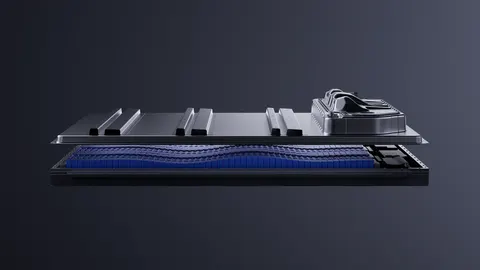
- Chemistry
- LFP (lithium iron phosphate)
- Platform variants
- Long-life/range and super-fast-charging EV variants
- BMS
- CATL integrated BMS with NP3.0 safety architecture
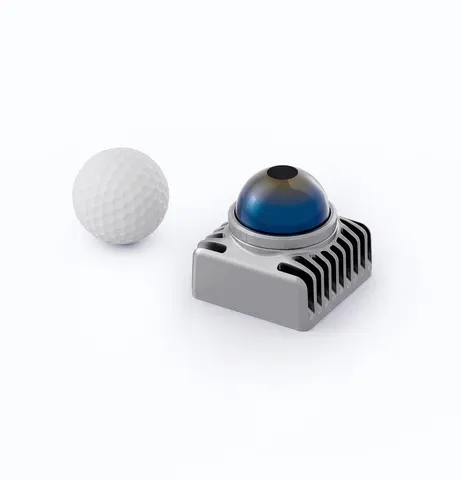
- Field of view
- 360° horizontal; -7° to 52° vertical
- Detection range
- 40 m at 10% reflectivity, 100 klx (typical); 100 m cut-off, not guaranteed target range
- Point rate
- 200,000 points/s (first return)