
Payment Terms and Incoterms for Buying Robots and Components from China
Source: https://sourcebotics.com/guides/payment-and-incoterms-for-china-sourcing/
Short answerA purchase from a Chinese manufacturer is defined by two separate choices: the payment terms, which decide when money moves, and the Incoterms rule, which decides where risk and costs pass from seller to buyer. Agree both in writing on the proforma invoice, match them to the order value and the goods, and plan insurance, export documents and import clearance around the rule you choose.
Two decisions that are often confused
Payment terms answer the question "when does the supplier get paid, and against what?" Incoterms answer a different question: "at what point does the buyer take over the risk of loss and the cost of moving the goods?" A supplier can ship under FOB Shanghai and still require full payment before loading; another can ship DAP to your laboratory and accept payment against documents. Negotiating one does not settle the other, so the proforma invoice should state both explicitly, along with the currency, the bank details and the validity of the offer.
Common payment terms with Chinese suppliers
Telegraphic transfer (T/T) in advance. Most component and research-robot orders are paid by bank transfer. A deposit on order confirmation and the balance before shipment is a common structure for production orders; samples and small orders are usually paid in full before dispatch. Advance payment is simple and fast, but the buyer carries the risk until the goods arrive, so it suits established suppliers, modest values and standard catalogue items.
Balance against copy of the bill of lading. For sea freight, the balance may be paid when the supplier sends a copy of the bill of lading showing that the goods have been loaded. This gives the buyer evidence of shipment before the final payment, while the supplier keeps control of the original documents until paid.
Documentary letter of credit (L/C). A bank undertakes to pay the supplier when documents that comply with the credit are presented. Letters of credit add bank fees, paperwork and time, and a single discrepancy in a document can delay payment. They are used for larger orders, new relationships or when a buyer's organisation requires them. Most credits are issued subject to the ICC's UCP 600 rules.
Open account and institutional purchase orders. Universities and large companies often issue purchase orders with payment after delivery. Chinese manufacturers may accept this from known buyers or through a local distributor, but rarely for a first order with a new customer. If your procurement rules require it, raise the point at the inquiry stage so the quotation can be structured accordingly.
| Payment method | When the supplier is paid | Main buyer risk | Typical use |
|---|---|---|---|
| T/T in advance | Before production or before shipment | Goods not shipped or not as ordered | Samples, small and repeat orders |
| Deposit plus balance before shipment | Part on order, rest before dispatch | Balance paid before inspection unless an inspection is agreed | Production orders |
| Balance against B/L copy | After loading is evidenced | Quality issues found after arrival | Sea freight orders |
| Letter of credit | When compliant documents are presented | Documents comply but goods do not | Large or first-time orders |
| Open account | After delivery, on agreed terms | Low for the buyer | Established relationships |
Incoterms rules used for robotics shipments
The Incoterms rules are published by the International Chamber of Commerce. The current edition, Incoterms 2020, contains eleven rules. Seven can be used for any mode of transport (EXW, FCA, CPT, CIP, DAP, DPU and DDP); four are intended for sea and inland waterway transport (FAS, FOB, CFR and CIF). Always name the edition and a precise place, for example "FCA Shenzhen, seller's warehouse, Incoterms 2020".
EXW (Ex Works). The buyer collects from the factory and handles export clearance. Few overseas buyers can do this in China, so EXW is mainly useful when your own forwarder has a Chinese office.
FCA (Free Carrier). The seller clears the goods for export and hands them to the buyer's carrier at a named place. FCA suits air freight, courier and consolidated shipments, which covers most component orders.
FOB (Free On Board). The seller clears for export and loads the goods on the vessel at the named port. FOB is widely quoted for sea freight, but it is designed for goods handed over at the ship's rail; for containerised cargo handed over at a terminal, FCA describes the transfer more accurately.
CIF and CIP. The seller pays freight and insurance to the named destination, but risk passes to the buyer when the goods are handed over in China. Under Incoterms 2020, CIP requires a higher minimum level of insurance cover than CIF. Check what the policy covers and in whose name before relying on it.
DAP and DDP. Under DAP the seller delivers to your named address, and you handle import clearance and duties. Under DDP the seller also pays import duties and taxes, which requires the seller or its agent to act as importer in your country. Check that arrangement carefully, because the importer of record carries legal responsibilities.
| Rule | Export clearance | Main freight paid by | Risk passes to buyer | Import duties and taxes |
|---|---|---|---|---|
| EXW | Buyer | Buyer | At the seller's premises | Buyer |
| FCA | Seller | Buyer | When handed to the buyer's carrier | Buyer |
| FOB | Seller | Buyer | When loaded on the vessel | Buyer |
| CIF / CIP | Seller | Seller | When handed over in China | Buyer |
| DAP | Seller | Seller | On arrival, ready for unloading | Buyer |
| DDP | Seller | Seller | On arrival, ready for unloading | Seller |
Matching terms to the order
For a single sample or a few components shipped by courier, full advance payment and FCA or DAP is the simplest combination: the courier collects, the supplier prepares the export paperwork and you clear the parcel on arrival. For a production order of actuators or sensors, agree a deposit, a pre-shipment inspection and the balance after inspection, and choose FCA or FOB if you have a forwarder you trust. For complete robots and anything containing lithium batteries, confirm that the carrier will accept the shipment before agreeing a delivered rule, because dangerous-goods rules limit how and by whom batteries can be shipped.
Points to write into the proforma invoice
- Exact model, configuration, quantity, unit price and currency.
- Payment schedule, including what triggers each payment.
- Incoterms rule, named place and edition.
- Delivery date or lead time and what happens if it is missed.
- Inspection or acceptance test before the balance is paid.
- Warranty period, spare parts and return conditions.
- Documents supplied with the shipment, such as the commercial invoice, packing list, certificate of origin and battery test summary.
Sources
FAQ
Is a deposit normal for a first order?
Yes. Most manufacturers ask for a deposit or full payment from new customers. Reduce your risk by checking the company, paying the company account named on the contract, and agreeing an inspection before the balance.
Who should arrange insurance?
Whoever carries the risk during transit. Under FCA and FOB the buyer carries the main-carriage risk and should arrange cover; under CIF and CIP the seller buys insurance, but the buyer still carries the risk once the goods are handed over.
Can I change the Incoterms rule after the order?
It is possible if both parties agree, but the price usually changes because the costs move between seller and buyer. Settle the rule before you confirm the order. Your customs broker or freight forwarder should confirm the documents, duties and clearance arrangements for your specific shipment.
Planning a robotics purchase? Share the quantity, configuration and destination so we can check fit, availability and quote requirements.
Request a quote— The Sourcebotics sourcing desk
Related products

- Standing dimensions
- 1320 × 450 × 200 mm
- Weight
- About 35 kg including battery
- Body DoF
- 23
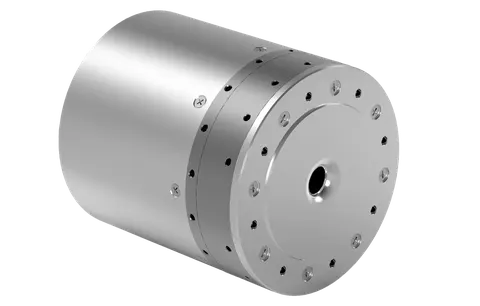
- Rated Torque
- 120 N.m
- Rated Speed
- 30 rpm
- Reduction Ratio
- 100:1
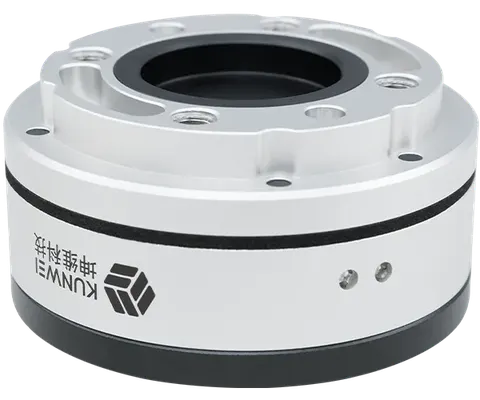
- Measurement axes
- Fx, Fy, Fz, Mx, My, Mz
- KWR75A ranges
- Fx/Fy/Fz: 50 N; Mx/My/Mz: 2 N·m
- KWR75B ranges
- Fx/Fy/Fz: 200 N; Mx/My/Mz: 8 N·m
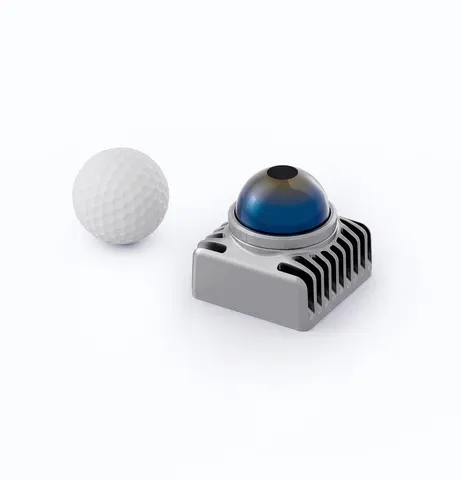
- Field of view
- 360° horizontal; -7° to 52° vertical
- Detection range
- 40 m at 10% reflectivity, 100 klx (typical); 100 m cut-off, not guaranteed target range
- Point rate
- 200,000 points/s (first return)