
Frameless Torque Motors Explained: What They Are and How to Specify One
Source: https://sourcebotics.com/guides/frameless-torque-motors-explained/
Short answerA frameless torque motor is supplied as a separate rotor and stator with no housing, shaft or bearings, so it can be built directly into a robot joint. It gives the designer control over size, mass and thermal path, but the joint maker must provide the bearings, feedback, cooling and assembly accuracy. Specify it by torque at your thermal limit, motor constant, dimensions, voltage and cogging.
What "frameless" means
A conventional servo motor arrives as a complete unit: housing, shaft, bearings, encoder and connector. A frameless motor arrives as two parts: a stator with windings, to be fixed into your housing, and a rotor with permanent magnets, to be fixed onto your shaft. The robot's own structure supplies everything else. Most frameless motors for robots are brushless permanent-magnet designs with a large diameter and short axial length, because torque grows with the radius of the air gap.
Why robot joints use them
Integrating the motor into the joint removes a separate housing and coupling, shortens the joint and reduces mass. The rotor can be mounted on a hollow shaft, leaving space for cables to pass through the joint. The stator can be pressed into a housing that also carries the reducer and output bearing, so heat flows directly into the robot structure. These benefits explain why many collaborative-robot joints, humanoid actuators and direct-drive rotary tables use frameless motors.
| Aspect | Housed servo motor | Frameless motor kit |
|---|---|---|
| Supplied parts | Complete motor with shaft, bearings, encoder | Rotor and stator only |
| Integration effort | Low | High: bearings, feedback, alignment, cooling |
| Size and mass | Housing and coupling add length | Shortest possible joint |
| Hollow shaft | Limited by motor design | Set by the rotor's inner diameter |
| Thermal path | Through the motor housing | Directly into the joint structure |
| Typical use | Machines with standard mounting | Robot joints, direct-drive axes |
Key specifications
Continuous and peak torque. Continuous torque is limited by winding temperature and depends on how well the stator is cooled. Manufacturers state it for a defined mounting and ambient temperature; your housing may conduct heat better or worse. Peak torque is limited by short-term heating and by magnetic saturation.
Torque constant (Kt). Torque produced per ampere of current, usually in N·m/A. It links the motor to the drive's current rating.
Motor constant (Km). Torque per square root of watt of copper loss, in N·m/√W. It is the best single measure of how efficiently a motor produces torque, and it is independent of the winding. Two windings of the same motor size have the same Km but different Kt and voltage behaviour.
Back-EMF constant and speed. The voltage generated per unit of speed. With your supply voltage, it determines the maximum speed. A winding with a high torque constant reaches its voltage limit at a lower speed.
Cogging torque. A ripple torque caused by the magnets' attraction to the stator teeth, present even without current. Low cogging matters for smooth slow motion and for joints that must be back-driven by hand. Skewed magnets or slots and particular slot-pole combinations reduce it.
Dimensions and air gap. Outer and inner diameters, stack length, and the required concentricity between rotor and stator. The joint's bearings must hold the rotor centred in the air gap under load.
Design responsibilities that move to the joint maker
Bearings and stiffness. The joint's bearings carry the rotor and keep the air gap even. Magnetic forces pull the rotor towards the closer side of the stator, so stiffness and alignment matter.
Feedback. An encoder or resolver must be mounted to read the rotor angle for commutation, and its offset to the magnets must be set during assembly or calibrated in software.
Thermal design. The stator's heat must reach the outside through the housing. Contact between stator and housing, materials and airflow decide how much continuous torque you actually get. Many frameless stators include a thermistor; connect it to the drive.
Assembly. Rotors with strong magnets are difficult to handle and must be inserted with fixtures to avoid damage. Ask the supplier for the recommended assembly method and tolerances.
Checklist for a frameless motor inquiry
- Required continuous and peak torque at the motor, after the reducer ratio.
- Maximum speed and the supply voltage available.
- Space envelope: outer diameter, inner bore and length.
- Mounting and cooling of the stator in your housing.
- Feedback device and drive you plan to use.
- Cogging and smoothness requirements.
- Documents needed: drawing, torque-speed curve, winding data and thermal data.
Sources
FAQ
Is a frameless motor more powerful than a housed motor of the same size?
The electromagnetic parts can be the same. The advantage is that the joint can be shorter and lighter, and that heat can flow into a larger structure, which may raise the usable continuous torque.
Can I buy the motor with an encoder fitted?
Some suppliers offer kits with matched encoders or partially assembled modules. If you want a complete unit, a joint module may suit you better than a frameless kit.
Which winding should I choose?
Choose the winding whose torque constant and speed fit your supply voltage and drive current. The supplier can recommend one if you state voltage, speed and torque.
Planning a robotics purchase? Share the quantity, configuration and destination so we can check fit, availability and quote requirements.
Request a quote— The Sourcebotics sourcing desk
Related products
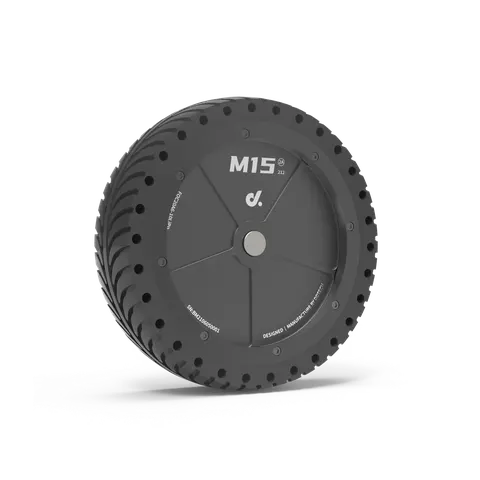
- Type
- Direct-drive outer-rotor permanent magnet torque motor
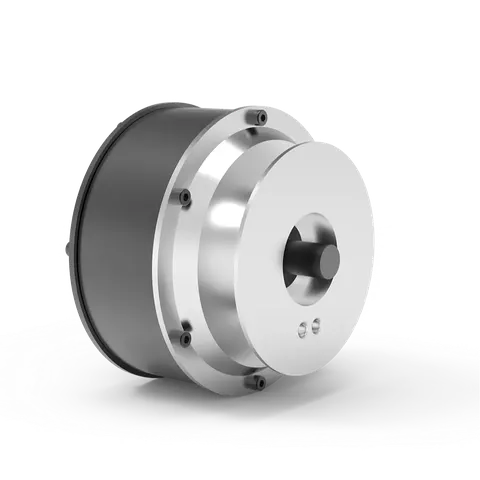
- Product scope
- M11 fitness-motor reference
- Motor ratings
- Await exact-model datasheet
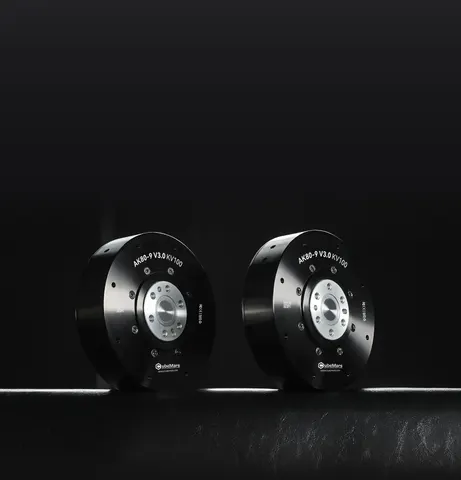
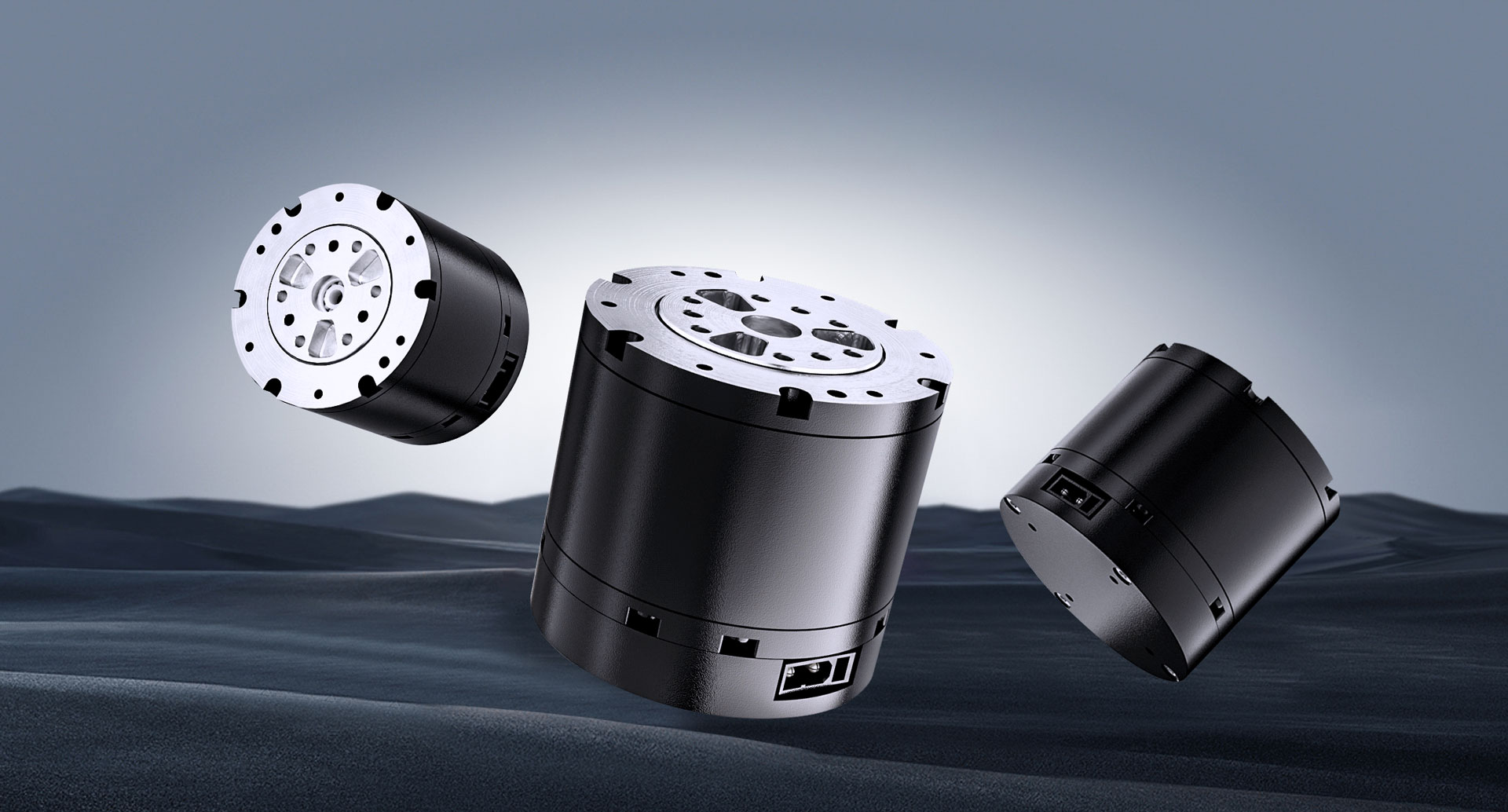
- Peak Torque
- 14 N·m; short-duration load
- Nominal supply
- 48 VDC
- Encoder arrangement
- 2 magnetic encoders; 14-bit single-turn absolute resolution