
Quasi-Direct-Drive vs Harmonic Actuators: Choosing a Joint for Your Robot
Source: https://sourcebotics.com/guides/quasi-direct-drive-vs-harmonic-actuators/
Short answerQuasi-direct-drive actuators pair a large motor with a low-ratio planetary stage, so they can be back-driven and estimate force from current; they suit legged and contact-rich robots. Harmonic actuators trade that transparency for high ratio, precision and compact torque; they suit arms and positioning. Choose by how the joint meets the world.
What the two designs are
A quasi-direct-drive (QDD) actuator uses a high-torque, usually outer-rotor or pancake motor with a single low-ratio planetary stage, plus encoders and a motor driver in one housing. The motor does most of the work; the gearbox only multiplies its torque a few times. Many joints sold for legged robots and research arms follow this pattern.
A harmonic actuator combines a smaller, faster motor with a high-ratio harmonic reducer, often adding an output-side encoder and a brake. The reducer does most of the torque multiplication. Integrated harmonic joint modules are common in collaborative arms and humanoid upper bodies.
| Question | Quasi-direct drive | Harmonic |
|---|---|---|
| Can the output be turned by hand? | Yes, with low resistance | Usually not without power |
| Force estimate from motor current | Usable for many tasks | Distorted by gear friction; often needs a torque sensor |
| Impact tolerance | Good; the motor absorbs impacts | Limited by the reducer's momentary rating |
| Output speed | High | Lower, set by ratio |
| Continuous torque per kilogram | Lower; motor heating limits it | Higher |
| Holding position without power | Needs a brake or control | Gear friction helps; brakes are common |
| Typical use | Legged robots, grippers, research arms | Cobots, humanoid arms, precise positioning |
Why transparency matters
A joint is transparent when forces at the output reach the motor with little loss, so motor current tells the controller how hard the limb is pushing. QDD joints are transparent because their single low-ratio stage adds little friction and little reflected inertia. That allows impedance and force control without a separate torque sensor and lets a leg absorb landing impacts in the motor rather than in gear teeth.
A harmonic joint hides contact forces behind a high ratio and gear friction. To control force accurately it typically needs a joint torque sensor or a force/torque sensor at the wrist, and its controller must respect the reducer's peak and momentary torque limits during collisions.
Where harmonic joints win
Harmonic joints deliver more continuous torque from a smaller motor, so they are lighter for slow, heavily loaded motions such as an arm holding a tool. Their high ratio gives fine positioning resolution, and their low backlash keeps repeatability good. They also hold position more easily, which reduces heating when an arm waits under load. For humanoid shoulders and elbows that carry the arm's weight for long periods, these properties often outweigh the loss of transparency.
Thermal limits: read rated torque carefully
QDD joints rely on the motor for torque, so their continuous rating depends heavily on cooling. Manufacturers state rated torque with a specific heat-sink plate, ambient temperature and speed; the same joint mounted in a closed plastic limb can deliver noticeably less. Peak torque is a short-duration value. When you compare joints, compare rated torque under matching conditions and check how long a peak can be held.
Harmonic joints heat less for the same output torque but have their own limits: the reducer's rated torque and the motor's. The lower of the two sets the continuous rating.
Checklist for choosing a joint type
- Does the joint make intermittent hard contact (landing, hitting, pushing)? Favour QDD.
- Must it hold a load for long periods with little power? Favour harmonic.
- Do you need force control without extra sensors? Favour QDD.
- Do you need high repeatability at the tool? Favour harmonic, or QDD with an output encoder.
- What bus and control modes does your controller support: CAN, CAN FD or EtherCAT?
- What are the mounting plate, airflow and ambient temperature in your design?
Send these answers with your inquiry so suppliers can recommend a joint and confirm ratings for your conditions.
Sources
FAQ
Are QDD actuators less accurate?
Their output resolution is limited by the motor encoder divided by a small ratio, so many QDD joints add an output-side encoder. Check the encoder arrangement on the datasheet.
Can I mix QDD and harmonic joints in one robot?
Yes. Many robots use QDD joints in the legs and harmonic joints in the arms. Keep one communication bus and power architecture across them to simplify control.
What should I test on samples?
Rated torque at your mounting and duty cycle, temperature rise over a realistic task, back-driving torque, encoder behaviour after power cycling and communication latency with your controller.
Planning a robotics purchase? Share the quantity, configuration and destination so we can check fit, availability and quote requirements.
Request a quote— The Sourcebotics sourcing desk
Related products
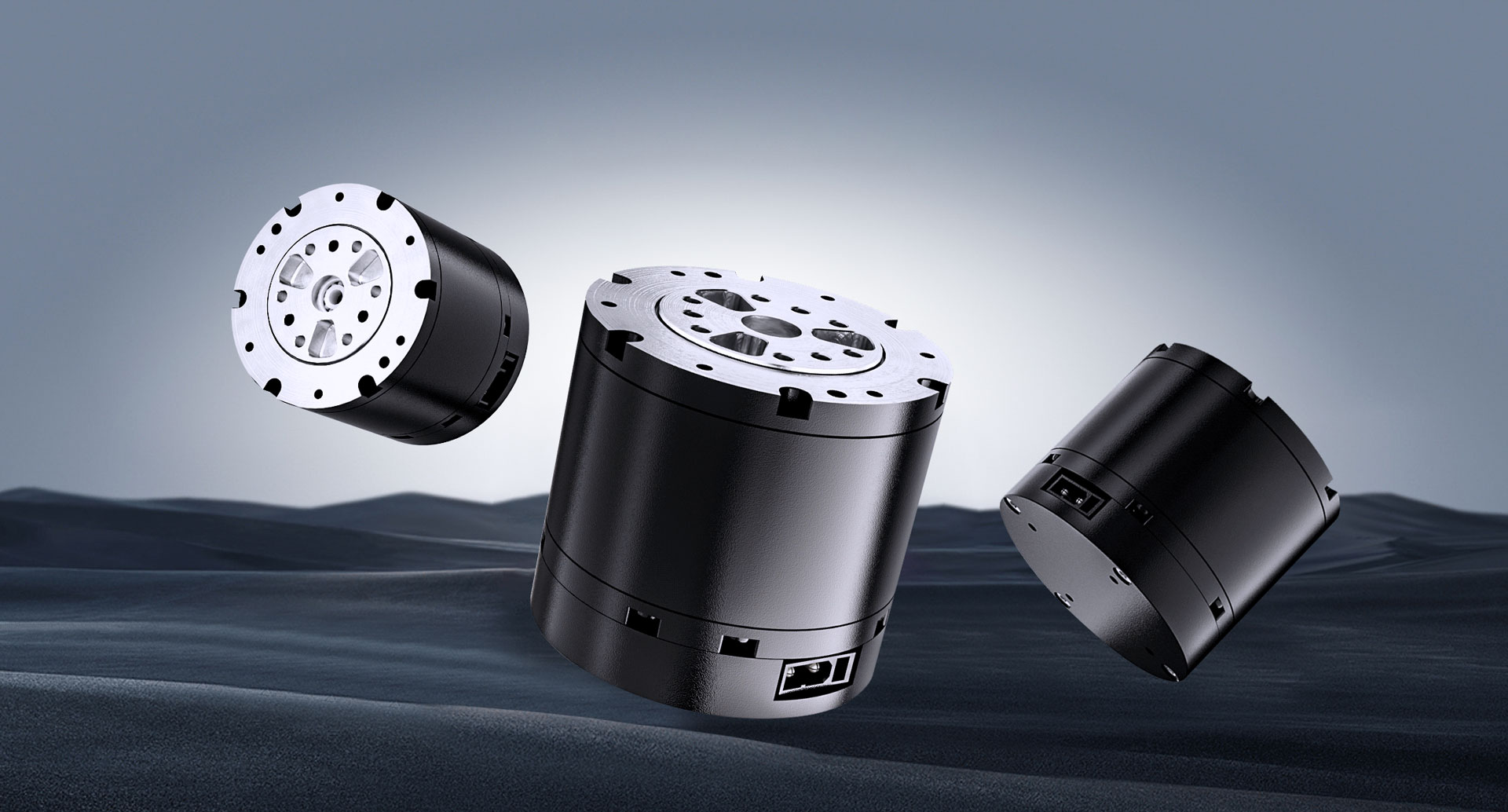
- Peak Torque
- 14 N·m; short-duration load
- Nominal supply
- 48 VDC
- Encoder arrangement
- 2 magnetic encoders; 14-bit single-turn absolute resolution
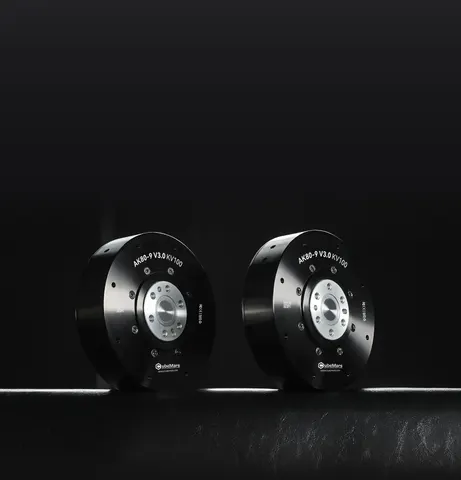
- Rated Torque
- 3.5 N·m
- Peak Torque
- 12.5 N·m
- Rated speed
- 120 rpm
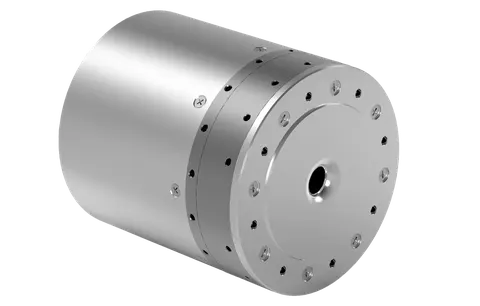
- Rated Torque
- 120 N.m
- Rated Speed
- 30 rpm
- Reduction Ratio
- 100:1