
Harmonic vs Planetary vs Cycloidal Reducers: How Each Works in a Robot Joint
Source: https://sourcebotics.com/guides/harmonic-vs-planetary-vs-cycloidal-reducers/
Short answerHarmonic reducers flex a thin spline to get a high ratio with little backlash in one stage. Planetary reducers share load across orbiting gears and stay efficient and back-drivable at low ratios. Cycloidal and RV reducers roll a lobed disc against pins for stiffness and shock tolerance. The mechanism explains each type's strengths, weaknesses and typical joint.
How a harmonic reducer works
A harmonic, or strain-wave, reducer has three parts. An elliptical wave generator sits inside a thin-walled, externally toothed flexspline, which in turn sits inside a rigid, internally toothed circular spline. The flexspline has slightly fewer teeth than the circular spline. As the wave generator turns, it pushes the flexspline into mesh at two opposite points; after one full turn of the input, the flexspline has walked backwards by the difference in tooth count. That small difference is what produces a large ratio in a single stage.
Because many teeth are engaged at once and the flexspline is preloaded against the circular spline, the gear mesh has very little play. The price is that the flexspline bends twice per input revolution, every revolution of its life. It is a fatigue part, and its rated life and overload limits follow from that.
How a planetary reducer works
A planetary stage has a central sun gear driven by the motor, several planet gears meshing with the sun, and an outer ring gear that the planets also mesh with. The planets are held by a carrier, which becomes the output. Load is shared across all the planets, so the stage is compact for the torque it carries, and rolling gear contact keeps efficiency high.
One stage gives a modest ratio. Higher ratios stack two or three stages, adding length, inertia and a little backlash at each mesh. A single low-ratio stage is easy to drive backwards from the output, which is why planetary gearing is the basis of quasi-direct-drive joints.
How cycloidal and RV reducers work
In a cycloidal reducer, an eccentric bearing on the input shaft drives a disc with a lobed edge around a ring of fixed pins. The disc has one lobe fewer than there are pins, so it rotates slowly backwards as it wobbles around the ring. Output pins or rollers pass through holes in the disc and pick up its slow rotation. Many lobes share the load in rolling contact, which gives high stiffness and tolerance to shock.
An RV reducer places a small planetary stage in front of a cycloidal stage and builds both into a housing with a large output bearing. The first stage lowers the speed seen by the cycloidal stage and spreads load across several crankshafts. The result is the heavy-duty joint found at the base and shoulder of most industrial robot arms.
| Property | Harmonic | Planetary | Cycloidal / RV |
|---|---|---|---|
| Ratio per stage | High | Low to moderate | High |
| Backlash | Very low by design | Depends on grade and number of stages | Low |
| Shock tolerance | Limited by flexspline fatigue | Good | High |
| Back-drivability | Poor at typical ratios | Good at low ratios | Poor |
| Mass for a given torque | Low | Low to moderate | Higher |
| Hollow shaft option | Common | Less common | Common on RV units |
What the mechanism means for specifications
Backlash and lost motion. Harmonic units achieve low play through preload rather than tight machining alone, so their lost motion under small reversing loads matters more than backlash at zero load. RV units are specified the same way. Planetary units are usually sold in precision grades, and the grade, not the type, sets the figure you will see.
Stiffness. The flexspline makes harmonic reducers softer at small deflections than RV reducers of similar torque. In an arm, that softness shows up as tool deflection under load and as resonance that limits controller gains. RV stiffness is one reason heavy industrial arms hold their accuracy at full payload.
Overload and life. Harmonic life is governed by flexspline fatigue and the wave-generator bearing; occasional peaks above the momentary rating consume life quickly. Cycloidal and RV units spread impacts across many rolling contacts and tolerate them better. Planetary life depends mostly on gear and bearing sizing.
Efficiency and heat. Planetary stages are the most efficient, which matters for battery-powered and legged robots. Harmonic efficiency varies with speed, load and temperature, so check the curve at your operating point rather than one headline value.
Trade-offs by robot joint
- Light arms, humanoid arms and wrists: harmonic, for ratio, low play and compact hollow-shaft packaging.
- Legged robot hips and knees: low-ratio planetary, for back-drivability, impact tolerance and torque estimation from motor current.
- Industrial robot base and shoulder: RV, for stiffness and shock tolerance under heavy payloads.
- Dexterous hand fingers: small harmonic or planetary stages, or screw drives, depending on the hand's force and space budget.
Checklist when you compare types
- Write the joint's torque profile, including collisions and emergency stops.
- Decide whether the joint must be back-drivable or estimate force from current.
- Set the stiffness and lost-motion limits the task needs at the tool, not only at the joint.
- Check mass and length against the space in the limb.
- Compare rated life at your own load and speed.
Sources
FAQ
Is a harmonic reducer always more precise than a planetary one?
It usually has less play at the same ratio, but precision planetary grades can match it in some joints. Compare lost motion and stiffness measured under conditions that resemble your load.
Why do legged robots avoid high-ratio reducers?
High ratios multiply the motor's inertia seen at the output and make the joint hard to back-drive, so landing impacts load the gearbox instead of being absorbed by the motor and controller.
Can a cycloidal reducer replace a harmonic one in a humanoid arm?
It can, if the extra mass and size are acceptable. Some designs use compact cycloidal stages for their shock tolerance; the trade is weight at the end of the limb.
Planning a robotics purchase? Share the quantity, configuration and destination so we can check fit, availability and quote requirements.
Request a quote— The Sourcebotics sourcing desk
Related products
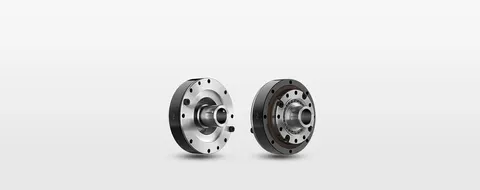
- Type
- Hat-type harmonic reducer unit
- Backlash
- Zero backlash
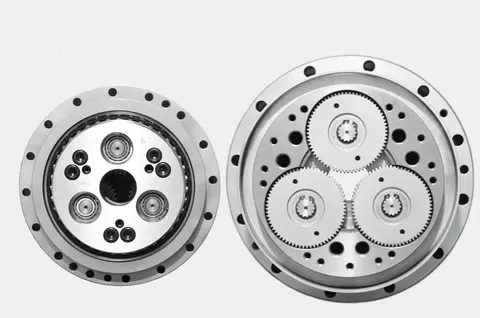
- Type
- Two-stage cycloidal (RV) precision reducer
- Reduction Ratio
- 1/81
- Rated Torque
- 250 N·m
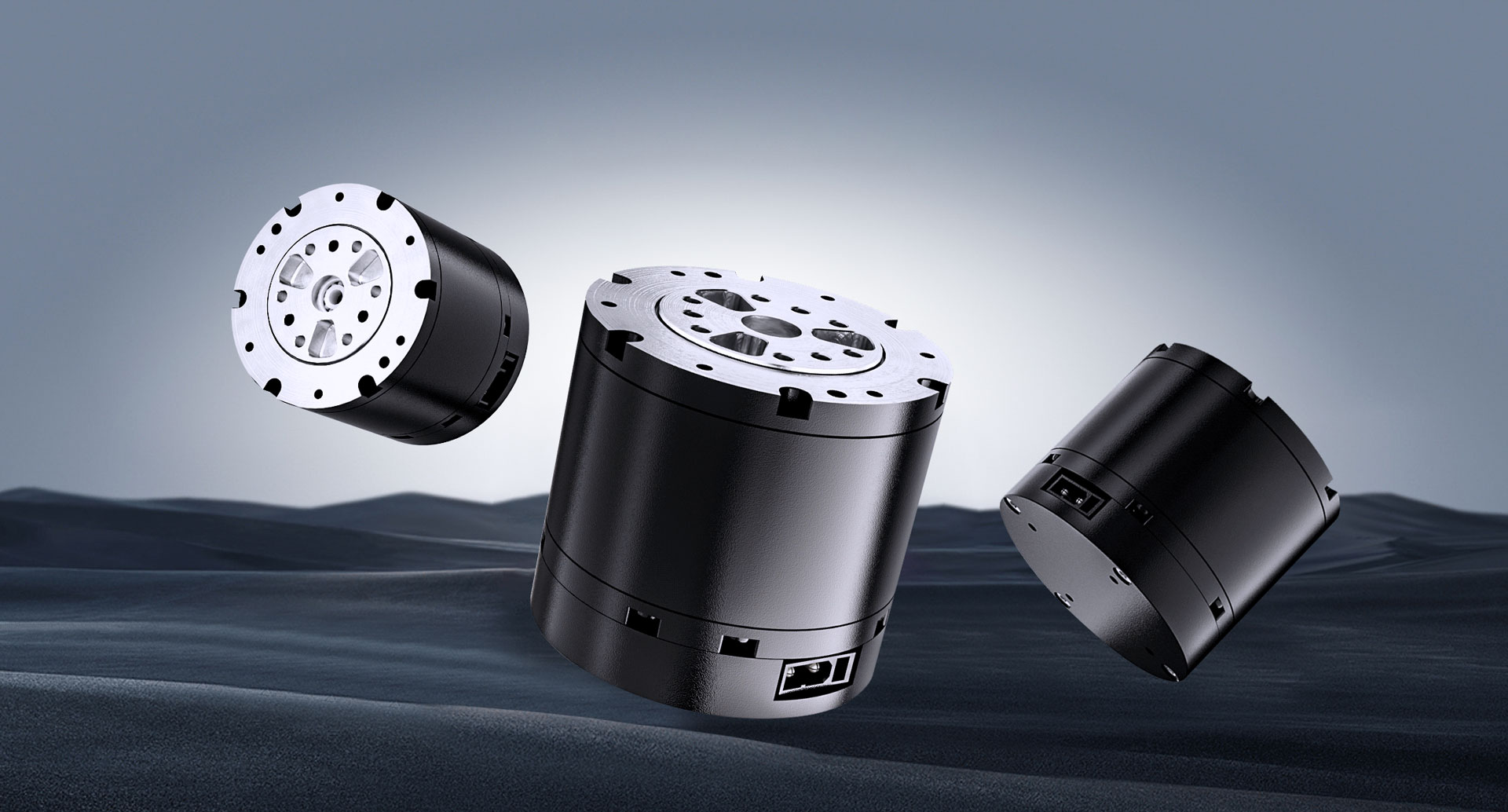
- Peak Torque
- 14 N·m; short-duration load
- Nominal supply
- 48 VDC
- Encoder arrangement
- 2 magnetic encoders; 14-bit single-turn absolute resolution
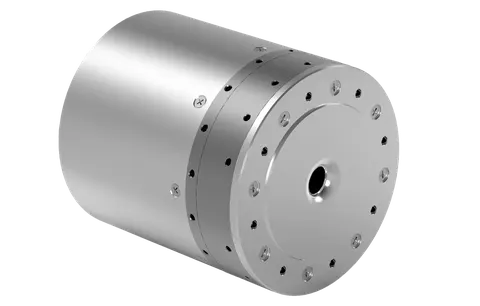
- Rated Torque
- 120 N.m
- Rated Speed
- 30 rpm
- Reduction Ratio
- 100:1