Humanoid Robot Bill of Materials: What Goes Into a Humanoid
Source: https://sourcebotics.com/guides/humanoid-robot-bom-explained/
Short answerA humanoid robot's bill of materials is dominated by its joints: rotary and linear actuators with their motors, reducers, encoders and drives. Hands, sensors, compute, battery and structure complete it. Understanding the BOM helps you compare complete robots, plan spare parts and source components for your own humanoid platform.
Why the BOM matters to buyers
Whether you buy a complete humanoid or build one, the bill of materials explains where performance, cost and risk sit. A robot with more powered joints can do more, but every joint adds a motor, a reducer, an encoder, a driver and wiring. Knowing which components a robot uses also tells you what spare parts to stock and which suppliers you depend on.
Joints: the largest group
A full-size humanoid typically has twenty to forty or more powered joints across legs, waist, arms, neck and hands, depending on the design. Each joint is an actuator assembly.
Rotary actuators. A frameless or housed brushless motor, a reducer, one or two encoders, a motor driver and often a brake, built into a joint module. Hips and knees need high torque and impact tolerance; shoulders and elbows need torque density and precision; wrists and neck need compactness.
Linear actuators. Some humanoids drive knees, ankles or other joints with linear actuators, usually a motor with a planetary roller screw or ball screw, connected to the joint through a linkage.
Reducers. Harmonic reducers for arms and compact joints, planetary stages for legs and quasi-direct-drive joints, and cycloidal designs in some high-load joints.
Encoders and drivers. Motor-side encoders for commutation and output-side encoders for joint position; drivers that run current loops close to the motor and communicate over CAN, CAN FD or EtherCAT.
Hands
Hands range from simple grippers to dexterous hands with six or more active degrees of freedom and many moving joints. Dexterous hands contain their own miniature actuators, which may be linear actuators driving tendons or linkages, plus tactile sensors and electronics. A hand can add considerable complexity and cost to the upper body.
Sensing
Perception. Depth cameras, stereo cameras and often a LiDAR in the head or torso for mapping and navigation.
Proprioception. IMUs in the torso and sometimes the feet; joint encoders; joint torque sensors in some designs; six-axis force/torque sensors at the ankles or wrists.
Touch. Tactile sensors in fingertips, palms and sometimes body surfaces.
Compute, power and structure
Compute. One or more embedded computers for perception and planning, plus real-time controllers for whole-body control. Many platforms include a module with a GPU for AI workloads.
Power. A lithium battery pack with BMS, power distribution, DC-DC converters and emergency stop circuits.
Structure. Aluminium alloy, magnesium and composite parts, bearings, covers and cable routing, designed to keep mass low in the limbs.
| BOM group | Main components | What drives cost and performance | Questions for suppliers |
|---|---|---|---|
| Joint actuators | Motors, reducers, encoders, drivers, brakes | Number of joints, torque, impact tolerance | Rated vs peak torque, thermal limits, bus |
| Linear actuators | Motors, roller or ball screws | Force, stroke, efficiency | Load rating, life, backlash |
| Hands | Micro actuators, tendons or linkages, tactile sensors | Active DOF, force, sensing | Grip force, durability, SDK |
| Perception | Depth cameras, LiDAR | Range, field of view, robustness | Drivers, synchronisation |
| Proprioception | IMU, joint torque sensors, F/T sensors | Control quality, safety | Sampling rate, noise, interface |
| Compute | Embedded computers, real-time controllers | AI capability, latency | Software stack, upgrade path |
| Power | Battery, BMS, power distribution | Runtime, safety | Capacity, swap, shipping documents |
| Structure | Frames, covers, bearings | Mass, stiffness, durability | Materials, repair parts |
Comparing complete humanoids through the BOM
When you compare humanoids, look past headline height and degrees of freedom. Ask how many joints are powered and which are passive; which joints use which actuator type and what their rated and peak torques are; whether hands are included and what they can do; which sensors are standard and which are options; how long the battery runs on your task and whether it can be swapped; and what software access you get to each layer. Two robots with the same number of degrees of freedom may differ widely in joint torque, sensing and openness.
Spare parts and service
Joints and hands take the most wear and impact. Ask the manufacturer which joint modules can be replaced by the user, how long replacement takes and what spare kit they recommend for your usage. For research platforms, a spare leg or arm joint set can prevent weeks of downtime.
Building your own humanoid
If you design a humanoid, the same BOM becomes your sourcing plan. Choose a joint family with consistent communication and power interfaces, so that firmware and wiring are shared. Sample the highest-load joints first. Check that your battery and drives agree on voltage range and regenerative energy. Our component categories cover each group, with model comparisons and sourcing notes.
Sources
FAQ
Which part of a humanoid costs the most?
In most designs the joint actuators, as a group, represent the largest share because there are so many of them. Hands and compute can also be significant depending on specification.
Are humanoid joints interchangeable between brands?
Rarely. Mechanical interfaces, communication protocols and firmware differ. Plan on one joint family per robot.
What should I stock as spares?
The joint modules that see the most impact, usually knees, ankles and hips, plus hand components, batteries and cables. Ask the manufacturer for their recommended kit.
Planning a robotics purchase? Share the quantity, configuration and destination so we can check fit, availability and quote requirements.
Request a quote— The Sourcebotics sourcing desk
Related products
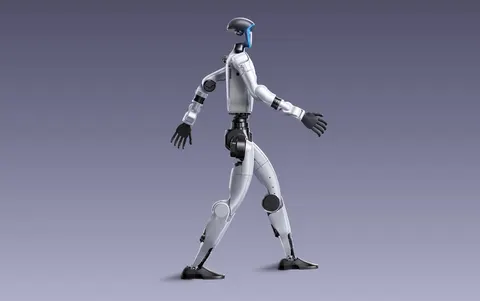
- Standing dimensions
- 1320 × 450 × 200 mm
- Weight
- About 35 kg including battery
- Body DoF
- 23
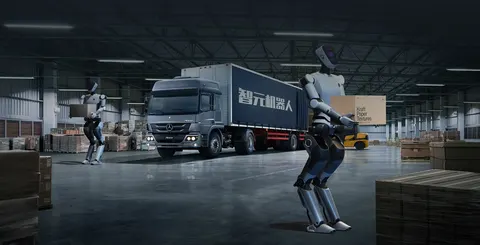
- Height
- 169 cm
- Weight
- 69 kg
- Active DOF
- 40+; exact count depends on configuration