
Solid-State vs Mechanical LiDAR: Scanning Methods for Robots
Source: https://sourcebotics.com/guides/solid-state-vs-mechanical-lidar/
Short answerMechanical LiDAR spins a measuring head to cover 360°; solid-state and semi-solid-state designs steer or spread the laser with small or no moving parts and usually cover a narrower field of view. For robots, the choice rests on field of view, minimum range, point density, size, power and how the sensor copes with vibration and weather, more than on the label.
How a LiDAR measures distance
A LiDAR sends pulses or a modulated beam of laser light and measures the light that returns from surfaces. Most robot LiDAR uses time of flight: the sensor times how long a pulse takes to return and converts it to distance. Some designs use frequency-modulated continuous wave (FMCW) measurement, which can also measure the radial speed of each point. The scanning method decides where the beams point, how many points are produced and how the field of view is covered.
Mechanical spinning LiDAR
A mechanical LiDAR mounts several laser emitters and detectors on a head that rotates, typically several to twenty times per second. Each emitter traces a ring around the sensor, so a 32- or 64-channel unit produces 32 or 64 rings stacked vertically. The result is a full 360° horizontal field of view from one sensor, which is why spinning units are widely used on mobile robots, autonomous vehicles and mapping systems.
Single-channel 2D spinning LiDAR, which measures one plane, remains common for indoor navigation and obstacle avoidance on service robots and AMRs because it is compact and inexpensive.
Semi-solid-state LiDAR
Semi-solid-state designs keep a small moving element but no large rotating head:
MEMS mirror scanning. A tiny mirror on a silicon chip oscillates to steer the beam across the field of view. The mechanism is compact, but the field of view is limited by the mirror's deflection.
Rotating prisms or polygon mirrors. Optical elements rotate inside a fixed housing to steer the beam. Some designs use pairs of prisms to draw a non-repetitive pattern, so coverage of the field of view increases the longer the sensor integrates. These units often provide hemispherical or wide forward coverage.
Solid-state LiDAR
Flash LiDAR illuminates the whole scene at once and captures returns on a detector array, like a camera. It has no moving parts but its range is limited by how much laser power can be spread over the field of view.
Optical phased arrays steer the beam electronically by controlling the phase of light across many emitters. They promise very compact sensors, but few are in volume use.
Electronic scanning with addressable arrays fires individual emitters and reads matching detector pixels in sequence, scanning the scene without moving parts.
| Scanning method | Moving parts | Typical field of view | Strengths | Points to check |
|---|---|---|---|---|
| Mechanical spinning | Rotating head | 360° horizontal | Full surround view from one unit | Size, power, rotating-part lifetime |
| 2D spinning | Rotating head | 360° in one plane | Low cost, simple navigation | Sees only one plane |
| MEMS mirror | Micro-mirror | Forward, limited | Compact | Field of view, vibration sensitivity |
| Rotating prism | Internal optics | Wide forward or hemispherical | Dense coverage over time | Pattern suits slow integration |
| Flash | None | Forward | Robust, simple | Shorter range |
Wavelength and eye safety
Most robot LiDAR operates near 905 nm, where silicon detectors are inexpensive. Some long-range units use about 1550 nm, which permits higher pulse energy within eye-safety limits but needs more expensive detectors. Sensors sold for use around people are normally specified as Class 1 laser products under IEC 60825-1. Ask for the laser classification on the datasheet.
What matters on a robot
Field of view and blind zone. Check the vertical field of view and the minimum detection distance. A long-range unit may not see obstacles close to the robot's base, so mobile robots often combine a main LiDAR with short-range sensors.
Point density where you need it. Channel count alone does not describe density. Compare the angular resolution in the region of interest, and whether the scan pattern repeats or fills in over time.
Reflectivity and sunlight. Range is quoted at a stated target reflectivity. Dark targets, glass and bright sunlight reduce effective range; compare figures at the same reflectivity.
Vibration and environment. Legged robots and outdoor vehicles subject sensors to shock and vibration. Check the operating temperature, IP rating and shock and vibration specifications.
Data and synchronisation. Check the Ethernet interface, point rate, time synchronisation support such as PTP, and driver support for your software stack.
Sources
FAQ
Is solid-state always more reliable than mechanical?
Fewer moving parts remove one wear mechanism, but reliability also depends on optics, electronics and sealing. Ask for rated lifetime and environmental test data for the specific model.
Do I need 3D LiDAR for indoor navigation?
Many indoor robots navigate well with 2D LiDAR. 3D LiDAR helps detect overhanging obstacles, slopes and objects below the scan plane, and improves mapping in complex spaces.
Can a LiDAR replace a depth camera?
They complement each other. LiDAR measures longer ranges with consistent accuracy; depth cameras give dense, short-range images with colour. Many robots use both.
Planning a robotics purchase? Share the quantity, configuration and destination so we can check fit, availability and quote requirements.
Request a quote— The Sourcebotics sourcing desk
Related products
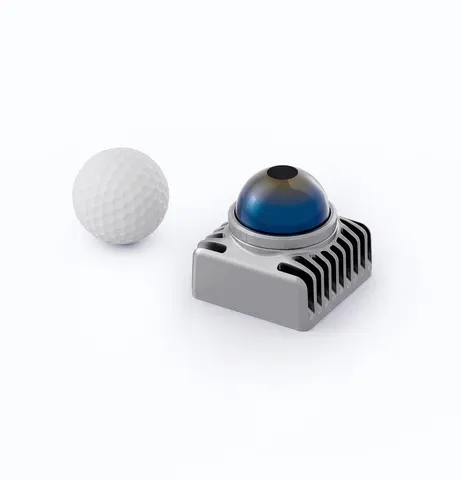
- Field of view
- 360° horizontal; -7° to 52° vertical
- Detection range
- 40 m at 10% reflectivity, 100 klx (typical); 100 m cut-off, not guaranteed target range
- Point rate
- 200,000 points/s (first return)
- Type
- Hyper-hemispherical mini 3D lidar
- Channels
- 128
- Range
- 40 m @10% reflectivity (60 m max)
- Type
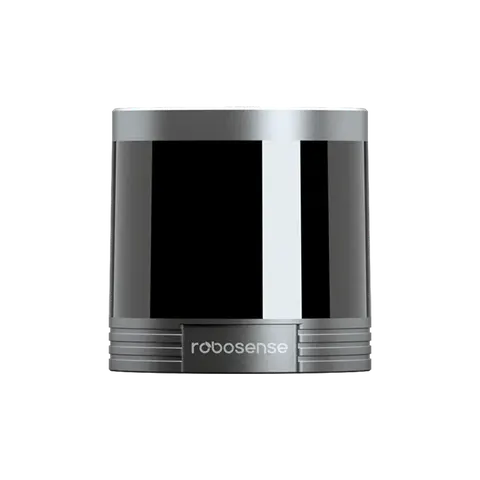
- Mechanical 360-degree lidar
- Channels
- 32
- Range
- 150 m (110 m @10% NIST)
- Conditional range
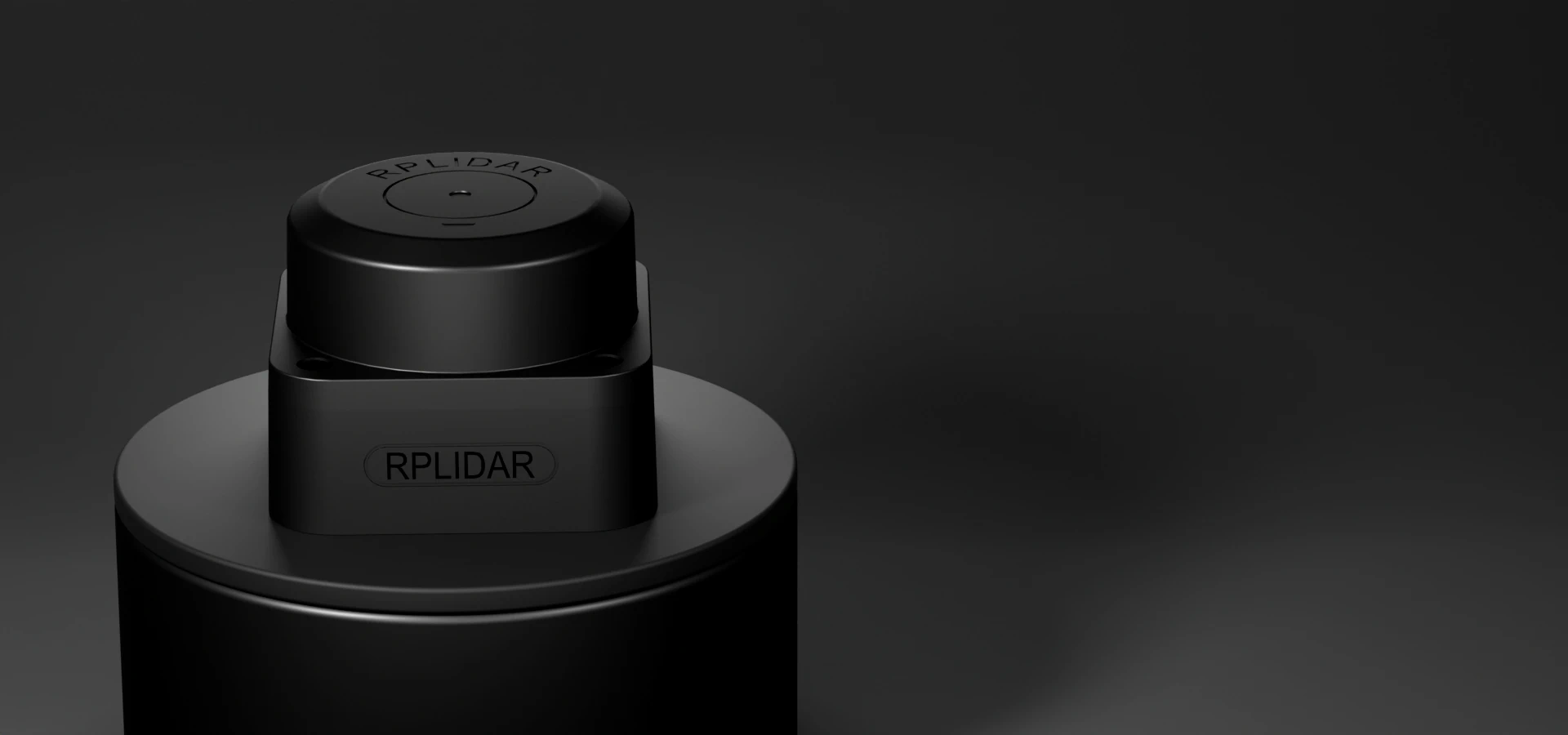
- 0.05–12 m at 70%; 0.05–6 m at 10% reflectivity
- Sampling / scan
- 5,000 samples/s; 10 Hz typical rotation
- Native interface
- 3.3 V TTL UART, 460800 baud; 5 V sensor supply